
Week 9 had a lot of content and lots of points to discuss. However, one point that has extremely come to mind is framing. Frames are stimuli based on experiences.
Framing does involve selecting a part of reality and putting it in a way that is relatable to communicate a text.
A massive example is Toy Story. Our perceived thought is of a toy that we used to love and play with when we are younger. The movie did so well as it brings in nostalgia for the audience, as well as framing, communicating a general text of imagination, as well as masking a reality all people know so well.
Everything that was directly lived is now perception. This brings a focus on the phases of a sign. For instance, Toy Story is a mask, it covers up the basic reality of toys, by making them come to life and have their own problems, as a human does. This is why Toy Story is so unique and different, as it brings a common spectacle with a twist.
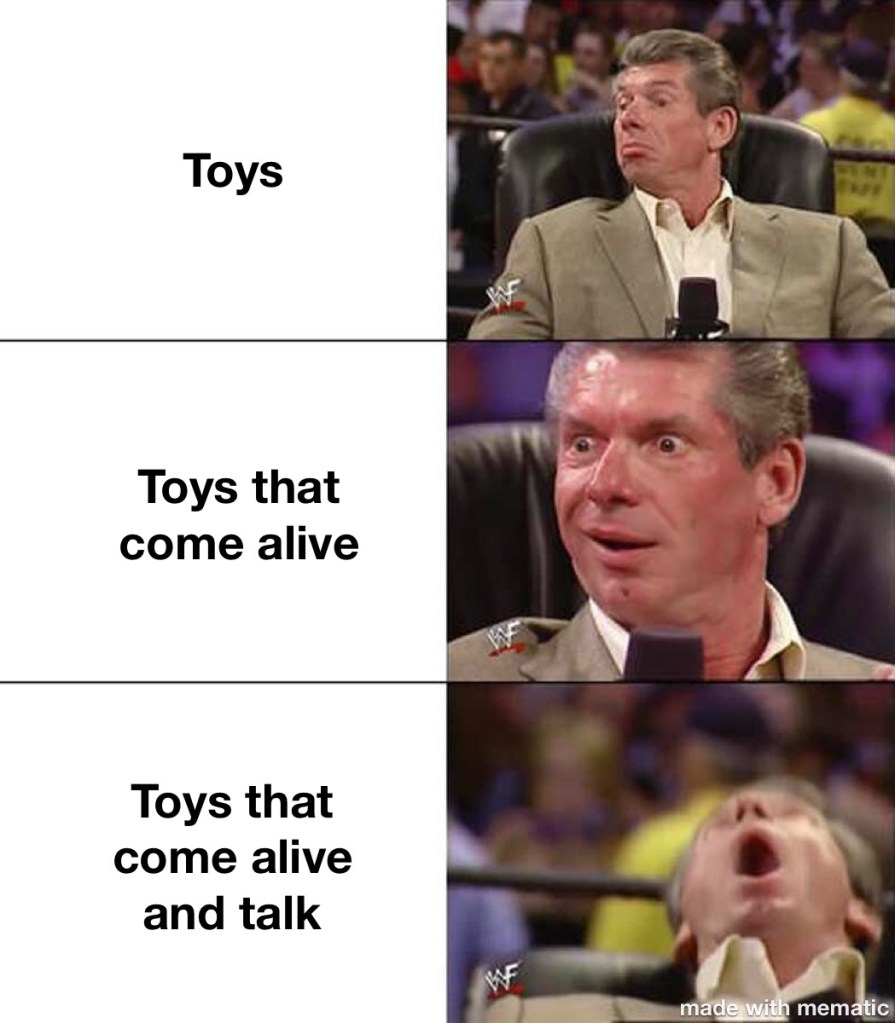
Therefore, framing and perception is all interrelated. The framing of an experience turns into a perception of the thing that is being produced is seen through the framing. This allows for producers of content to be relatable as well as unique as they mix with a perception whilst framing it the way they want to through the content they make.
 Mavro Productions
Great post Chrisos, like your use of a familiar media like Toy Story in order to convey your meaning in this post (did something similar in my blog using Black Mirror). I also like the use of nostalgia and how framing relates to our experiences, as a lot of media is targeted at a specific audience using this kind of framing. Keep up the good work!
LikeLike
great post! I liked how you explained how nostalgia frames our current experiences, I discussed something similar in my blog with how our experiences from childhood to now shape how we perceive the world!
LikeLike