Digital Artefact Additional Information

My digital artefact focuses on the beautiful connotations of sports following and watching. This will be provided and emphasised through various means of social media practises. Seen through YouTube, Soundcloud, Spotify, Apple Podcasts, Instagram, Facebook, a website and Twitter, the enhancement of Mavro Productions and its sub branches will allow for a further positive message of sport to be seen.

The different means of content sharing, through audio, visual and text caters to all people and further grows the content in which will be created.

Mavro Productions, Cypriot First League English, The Football Edge Pod and Talking Sports are pre-existing projects that will be continued to further the message depicted in the video above. These pages already have recognition and viewership all over the world. Examples include Cyprus, Portugal, USA, Greece and Spain. This DA will look to expand the content created to even bigger audiences around the world.

https://www.youtube.com/mavroproductions

https://www.talkingsports.com.au

https://www.instagram.com/cypriotfirstleague.en

https://podcasts.apple.com/au/podcast/the-football-edge-pod/id1489078296


Conservatism Is Not Dead

Instagram is a key social media platform which is used to portray an authentic sense of ones self.

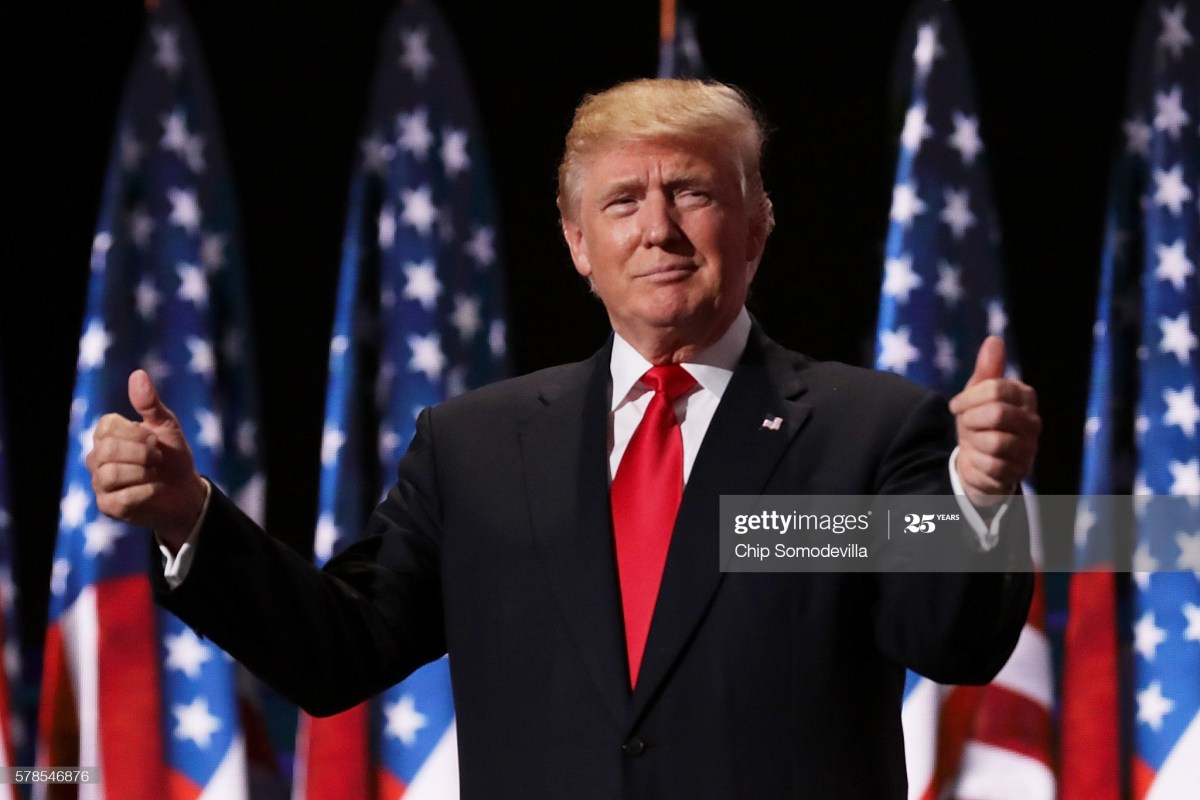
For me, this sense of self is based on the identification with the branch of Conservatism and right-wing policies. Conservatism focuses on traditional values, and has been highly disregarded as the media grows more liberal. A downward spiral in conservative trust has been built based on the rapid growth of left leaning institutions and attitudes. 30% of millennials are dissatisfied with the way Donald Trump (Pew Social Trends) is running the United States, a percentage in which I do no adhere too. 70% of millennials would vote for a socialist (The Hill). The praising of mass murderers like Che Guevara and the emphasis of deliberate lies that some news organisations attribute themselves too has led to a mass wave of younger people adhering to socialism. The deaths of over 100 million people under these types of regimes is hidden and untold (The Heritage).

Instagram offers a lot more affordances than Twitter. Instagram allows for those with a public account to have their posts shared on other people’s stories and a story feature to add photos, videos and text. This is unlike Twitter who do not offer a story setting, and Twitter drastically silences and removes any conservative or right-wing posts, which opposes does not suit their progressive nature. This also tarnishes the nature of freedom of speech. The Instagram stories are the key way in which this sense of self I endure is shown, sharing stats and figures as well as news that the media does not cover or is rarely seen. According to A. Cooper conservatives use resources and stats to build relationships with others.

According to CJ Calhoun, a public sphere is adopted through a web of social relationships. As more conservatives share their views, an imagined community is seen and a further spread of the public sphere is recreated and immersed into ones daily life.

There is no intended audience within the sense of self I possess. The sharing of the information is to help provide conservatives with a firm stance on their views, and to provide liberals with another side of the news. This allows for the occasional participation in political discourse, and opens up a new view for those who may have never read or seen anything from the other side of the political spectrum. Many more conservatives would find my social media presence accessible and acceptable. Although, I prefer if anyone and everyone is able to access it to see an altering view from their own, and one that isn’t silenced by social media institutions. The praise of Trump within my stories would lead to a more international appraisal by Conservative Americans. I also share the Liberal parties policies, which attracts access for domestic conservatives. However, my social media has an outreach all the way to Europe, allowing for a further expansion of conservative views and statistics. This allows for conservative views to still be upheld, and the practise of freedom of speech to still be adhered to.

SOURCES

A, Cooper, 2016, The Conservative Campaign, Political Communication in Britain

C,J,Calhoun, 1992, Habermas and the Public Sphere, Massachusetts Institute of Technology

C, Somodevilla, 2020, Republican National Convention Day Four, Getty Images, viewed on 25th of August, 2020

K, Parker, N, Graf, R, Igielnik, 2019, Generation Z Looks a Lot Like Millennials on Key Social and Political Issues, Pew Social Trends, accessed on 25th of August 2020, https://www.pewsocialtrends.org/2019/01/17/generation-z-looks-a-lot-like-millennials-on-key-social-and-political-issues/

L, Edwards, 2018, What Americans Must Know About Socialism, The Heritage Foundation, accessed on 25th of August 2020, https://www.heritage.org/progressivism/commentary/what-americans-must-know-about-socialism

M, Gstalter, 2019, 7 in 10 millennials say they would vote for a socialist: poll, The Hill, accessed on 25th of August 2020, https://thehill.com/homenews/campaign/467684-70-percent-of-millennials-say-theyd-vote-for-a-socialist-poll


Citizen Journalism: Cyprus

Citizen journalism can be seen as both a good and bad thing. According to S. Allan and E. Thorsen citizen journalism is putting too work the technologies all people use on a daily basis. With a global usage of 1.69 billion on Facebook (Statista), citizen journalism has never been better to spread news within social media. This is based on the notion by R. Sambrook that everyone must have access to information, which is immensely seen throughout the spread of social media.

There are however, also bad instances of citizen journalism on social media. Although there are many nations in which citizen journalism is a norm, R. Sambrook notes that not all people are protected under journalistic law in some nations. A Ukrainian man was murdered in 2000 for speaking out against the government. Then, there is also the issue of news rooms ‘digital doorstepping’ (R. Sambrook) rather than asking for witness testimonies. This can ultimately harm the legitimacy of the news story in which they are using, hindering real emotion from the ‘breaking news’. This can also diminish the full message of the news story being captured.

Now an example of citizen journalism in a unique part of the world.

Cyprus is a European nation in the Mediterranean Sea, filled with immaculate beaches, resorts and beautiful people. It is however, swept by the imperialism of Turkey, who illegally occupy 36% of the nation, and a staggering 142,000 persons were removed from their homes due to the invasion in 1974 (this includes my father). It is imperative that news is catered to all Cypriots abroad and in the nation. Some of the top news outlets in Cyprus include Sigma Live and Cyprus Mail. Even in the shores of Australia, news is delivered to Cypriots seen through the ‘Greek News from Cyprus’ program on SBS in the mornings.

When it comes to citizen journalism in Cyprus, it is virtually non-existent. The main topic that is primarily discussed by news outlet is the conflict apparent in Cyprus today. According to S. Sahin, they claim that media outlets pursue nationalistic intentions and claim the other side is wrong (this is in accordance to a Turkish Cypriot standpoint). Citizens journalism could be far more influential to expose the true feelings of the Cypriot Greek people, who have had their land swept away from them. S. Pavlou claims that many news outlets associated with a political party often use their own agenda rather than tackling civilian issues. Although Cypriot news integrate a lot of interviews, the small population of 1.1 million endures a hard process of citizens journalism.

Citizens journalism would really help Cyprus develop a strategy to the Cyprus conflict that plagues the nation since 1974, or at least offer insight into news stories from the people who live within the nation themselves. The conflict in itself continues to be disregarded by big powers such as the United Nations, who made the issue worse when they had to come in. Therefore, a citizens journalistic approach will allow for the corroboration between citizens, the community and news outlets to work together to find a solution. 90.71% of the population (statscounter) are on Facebook, social media could be a massive help for the nation, through the inception of citizens journalism within Cyprus.

PHOTO TAKEN BY ME 

REFERENCE LIST

C, Christophorou, S, Sahin, S, Pavlou, 2010, Media, Narratives, Politics and the Cyprus Problem, PRIO Cyprus Centre.

E, Thorsen, S, Allan, 2009, Citizen Journalism- Global Perspectives, Peter Lang.

J, Clement, 2019, Facebook: number of users online from 2015-2020, Statista, accessed on 17th August 2020, https://www.statista.com/statistics/490424/number-of-worldwide-facebook-users/

J, Owen, H, Purdey, R, Sambrook, 2009, International News Reporting: Frontlines and Deadlines, Blackwell Publishing Ltd.

StatsCounter, Social Media Stats Cyprus, accessed on 17th August 2020, https://gs.statcounter.com/social-media-stats/all/cyprus.


You’ll Never Support Alone

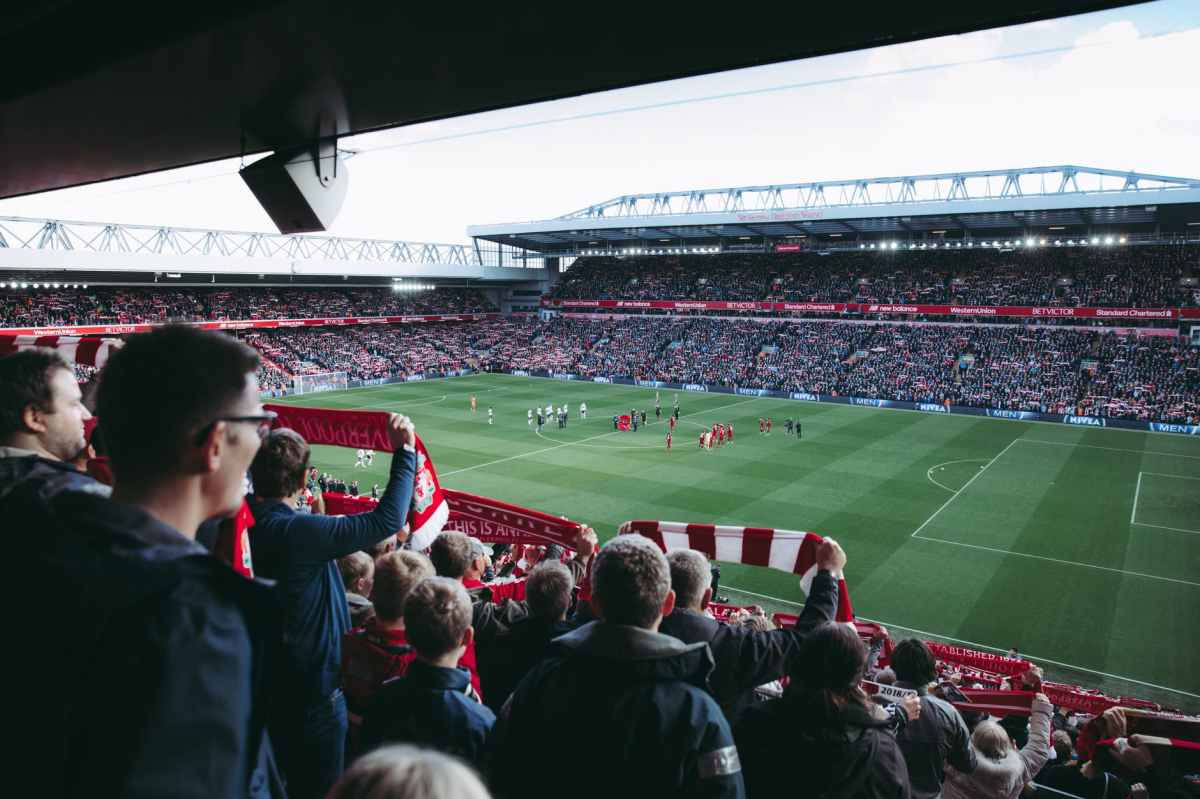
The ever-growing nature of football as a sport has been on a rapid rise, that it is now under the category of popular culture. Popular culture has been defined by Fiske as being created by the people (Understanding Popular Culture). Football as a sport is nothing without its fans, its active audience, which has had a presence in the overall growth of the sport since the inception of the Internet. Football has become more commercialised than ever before, thanks to the introduction of the world wide web and social media.

To put it perfectly, P. Fontes and R. Riberio in their book about Brazilian football, details that the sport has become globalised under the idea of ‘footballisation of the world’.

Let’s put this into perspective, FIFA, the leading organisation for football in the world, earns a revenue of $4.64 billion, with English club Manchester United having a brand value of $1.65 billion in 2019 (Statista). All seen through the overall involvement of the sport by fans all over the world. Europe as a whole love their football, 6 national teams in the top 10 world rankings are from the continent (FIFA). The European football market has a revenue of 28.9 billion Euros. More than half the world’s population watched the 2018 World Cup, showing its dominance as a popular culture and its dominance in the world of sports (FIFA).

The popularity of football can also be linked with the theory of an imagined community. Football fans feel like they are members of a group, they can connect with fans all over the world, with whom they have never met. The sharing of the support of a club has explained why the sport is on a continual rise. Fans become producers of the way the club operates, through the interaction of the teams merchandise and ‘imaginary community’. In accordance with the book by A.Kavoura, social media is a key way to see what works for a target audience. When a football club shares a post, the imagined community communicates with each other, showing the interconnectedness of social media, football and the concept of imagined communities. Media content becomes more universally parallel, as audiences become more passive. This imagined community is bigger than ever before, as a fan like me in Australia can communicate directly with the team I support all the way in England. Whether it is a comment, a like or a share, the communication with the team in this realm of an imagined community is still apparent. The concept of local to global is put into practise, through the ideas of the imagined community. Further connections with a club and its imagined community are seen through music, chants and branding, all essential for a growth of a popular culture.

The media has also had an integral impact of the concept of an imagined community. As they also consume the sport, they share the news up to date, providing an array of information. This allows for more interaction by fans to the news, and a further discussion seen through the use of social and news media.

Photo Source: Pixels.com.

Reference List

A, Kavoura, 2014, Social media, online imagined communities and communication research.

C, Gough, 2020, Barclays Premier League team brand values 2011-2019, Statista, accessed 9th of August 2020, available at, https://www.statista.com/statistics/236255/teams-of-the-english-premier-league-by-brand-value/.

C, Gough, 2020, Soccer Statistics and Facts, Statista, accessed 9th of August 2020, available at, https://www.statista.com/topics/1595/soccer/. ‘

FIFA, 2020, Men’s Ranking, accessed 9th of August 2020, available at, https://www.fifa.com/fifa-world-ranking/ranking-table/men/.

FIFA, 2018, More than half the world watched record-breaking 2018 World Cup, accessed 9th of August 2020available at, https://www.fifa.com/worldcup/news/more-than-half-the-world-watched-record-breaking-2018-world-cup.

J, Fiske, 1989, Understanding Popular Culture, Routledge.

P, Fontes, R, Riberio, 2014, The Country of Football: Politics, Popular Culture & the Beautiful Game in Brazil, BBB De Hollanda.

T, Bohle, Pixaby Photos, people watching soccer game, accessed 9th of August 2020, Photo https://www.pexels.com/photo/people-watching-soccer-game-1884574/”

We the Fans

As I switch on my TV, to watch my favourite basketball team play, the Toronto Raptors I drift apart into a different universe, with the full involvement on the team.

Jenkins’ 1992 book Textual Poachers focuses on audiences, and how audiences are passive, and an overall fandom is an alternative community. Media content becomes universally parallel as an audience becomes more passive. Let’s use my basketball team as an example, my team is based in Canada, but I am a passive fan from Australia and local to global aspects rise. Media, broadcasting and the sharing on social media further allows for the fandom to rise. For instance, last year’s NBA Finals in which the Raptors won, according to CBC, Canadian athletes watched their team worldwide, leading to a boost in the franchise and fandom of the club. This allowed the ESPN media entity to show more Raptors games as they grow in popularity. Highly based on the notion of studying fans and how loyalty equates to boosting fandom.

tower near high rise buildings
Photo by Adrian Lang on Pexels.com

Early study models are not reliable anymore, as they do not focus on the media boost in which we have seen in the world in the 21stcentury. Fans used to be seen as gullible and susceptible to lies told within media entities. Now, fans are more active than ever, and ultimately drive the media in which they love to make money. I heavily follow the Raptors Instagram page and check on a daily basis for new photos to add to my already massive album. On top of this, I collect cards of my favourite player Kyle Lowry, driven by media as I see advertising on my socials. This could not be taken into account within early study models as the media was not prominent, or even existent back then to add an audience interaction with media component to it. In 1910, being a fan of anything was considered unusual.

As we further study fans, we further see the corroboration between fans and media and how that shapes media entities. Yes, I will bring it back to basketball again. Fans want to wear what their players wear. So, the NBA Store ships worldwide and has exclusive offers on current trending items. Fans ultimately dictate how and what a media entity to do to further spread its audience.

Media stars have a huge influence on fandom and a common example of a corroboration with a media entity. Drake, the world-renowned rapper is the global ambassador for the Raptors. For those who watch the games, he’s on the sidelines hyping up the crowd, and also hyping up my couch! Fans of Drake corroborate with his social media and his posts and will in turn support the team he supports. CBS News support this claim, indicating that Drake is indeed loyal to the team from the north. Especially the crazy ones. Explaining this concept of passive fans and how fans become produser, playing a role in decisions made by entities.

In fact, the name ‘Raptors’ was voted for by fans, eluding to how fans are a major stakeholder in the overall brand and image of the media entity of the Raptors. The name also brings together several media entities, the fans, the team and Jurassic Park, the concept in which the team was named after. According to Bardown.com. the Raptors were heavily invested in pop culture.

References

Adrian Lang, Pixaby Photos, tower near high rise buildings, photograph, accessed 20th of April 2020, “https://www.pexels.com/photo/tower-near-high-rise-buildings-3727070/&#8221; rel=”nofollow”>Pexels.com</a>

Bardown Staff, The Raptors were almost named the dragons, which would have worked perfectly today, Bardown.com. Available at: https://www.bardown.com/the-raptors-were-almost-named-the-dragons-which-would-have-worked-perfectly-today-1.835389

Celebrity fans of every team, CBC. Available at: https://www.cbsnews.com/pictures/celebrity-fans-of-every-nba-team/7/

Jenkins, H, 1992, Textual Poachers, United States of America, Routledge.

The Canadian Press, (2019) Raptors fandom goes global as Canadian athletes cheer Toronto team, CBC. Available at: https://www.cbc.ca/sports/basketball/nba/canadian-athletes-cheer-raptors-1.5149665


Come All Ye Faithful


The public sphere is a social space in which different opinions can be expressed, and solutions can be discussed.

My public sphere is located within the means of conservativism and church groups. I get my news from conservative branches of online platforms such as YouTube channels and Fox. Catering to the content of my set ideologies, my public sphere is enhanced through these mediums. Within church, I learn about the news through the leaders within the church. This is where an area for discussion really comes into play. In accordance with Habermas and the Public Sphere by Calhoun, it is claimed in the book that the understanding of the public is solely based on private experience. As I learn about my own public sphere, and that which opposes my sphere it is attributed to experiences in which I have had. For instance, growing up in an Orthodox and conservative household.

photo of santorini greece
Photo by jimmy teoh on Pexels.com

My public sphere is operated on the notion of ethical conversation. Someone within the public sphere may have an opposing view. Political discourse does not lead to the premise of hatred, but rather civil conversation to understand why this opinion is the case. Further expressed in Tim Challies’ article on love and humility, stating that Christians humble themselves below the other person.

close up of tree against sky
Photo by Pixabay on Pexels.com

Church groups and conservatives are subject to many issues. This includes that they are non-conformists to an ever-growing liberal world. This issue does arise by those outside. However, as values of love and humility are taught, my public sphere in which I interact is, may develop the issue of not conforming, but remains firm in what they believe. Another issue is the toxic name calling within those outside my public sphere and constant assumption of judgement. This issue causes those within my public sphere to exit our public sphere, as they feel intimidated by the name calling seen outside the public sphere.

My public sphere in which I am considered to be in is open to anyone. Conservative, or not. Within the news publications I read, and the videos I watch, within my church public sphere we learn to open our arms to people. This way, no one is excluded, and everyone is included within the public sphere in which I identify with.

The media plays a crucial role in the public sphere. It continues to undermine my public sphere. The media aims to push an agenda against modern day Christianity, not covering stories of mass Christian persecution in the Middle East but will choose to cover a story slandering Christianity and religious sanctifications. The Guardian claims that persecution of Christians is coming close to genocide as an example of the mass persecution within the Middle East. My public sphere as a conservative is shattered throughout some media corporations, as they push an agenda of hating those who disagree with them. Contrary to that which is actually believed by those in my public sphere. Therefore, the integrity of news publications and media is further derailed as they focus on spreading hateful doctrine rather than covering news. As I see news from both inside and outside my public sphere, the news in which I read is catered to me and my public sphere. Thus, allowing me and others to choose their media publications based on their public sphere.

black and white cemetery christ church
Photo by Pixabay on Pexels.com


References

Challies, T., (2004), Love and Humility, Challies.com. Available at: https://www.challies.com/articles/love-humility/

Craig CJ., 1992, Habermas and the Public Sphere, USA, Massachusetts Industry of Technology Press.

Jimmy Teoh, Pixabay Photos, photo of Santorini Greece, photograph, accessed 20th of April 2020, “https://www.pexels.com/photo/photo-of-santorini-greece-1010657/&#8221; rel=”nofollow”>Pexels.com</a>

Pixabay Photos, black and white cemetery Christ church, photograph, accessed 16th of April 2020, “https://www.pexels.com/photo/black-and-white-cemetery-christ-church-208315/&#8221; rel=”nofollow”>Pexels.com</a>

Teoh, J, Pixabay Photos, photo of Santorini Greece, photograph, accessed 20th of April 2020, “https://www.pexels.com/photo/photo-of-santorini-greece-1010657/&#8221; rel=”nofollow”>Pexels.com</a>

Pixabay Photos, close up of tree against sky, photograph, accessed 20th of April 2020, https://www.pexels.com/photo/close-up-of-tree-against-sky-255441/&#8221; rel=”nofollow”>Pexels.com</a>

Wessler H and Freudenthaler R, 2018, Public Sphere

Wintour, P., (2019), Persecution of Christians ‘coming close to genocide’ in Middle East- report, The Guardian. Available at: https://www.theguardian.com/world/2019/may/02/persecution-driving-christians-out-of-middle-east-report


Fairfax v Google- A YouTube Copyright Overview

What was this lawsuit about?

In March 2007, Viacom sued Youtube and Google, on the grounds that they should be responsible for copyright violations committed by Youtube users and creators. The lawsuit lasted 4 years, and sought over $1 billion in damages. Viacom targeted over 100,000 Youtube videos for takedowns, however, this was controversial, as some videos among the 100,000 were not actually owned by Viacom, and were just home movies that didn’t need to be taken down. Not long after the lawsuit was ratified,a number of class action lawsuits were filed by music producers and other entertainment producers against Youtube, based on the same theory created by Viacom in 2007. 

 What was the final outcome of the case ? 

On June 23 2010, the judge decided that Google was protected by the Digital Millennium Copyright Act, a law passed in 1998 creating a “Safe Harbour” to shield them from liability. They were protected by the Act despite evidence of intentional copyright infringement. The judge held that while Google was aware of copyrighted material they could not specify or monitor if clips were uploaded with permission or illegally, and policing every upload would “contravene” the operation of the Digital Millennium Copyright Act. 

How does YouTube deal with copyright matter? 

YouTube deals with copyright matter in various different ways as copyright is taken extremely seriously for YouTube. Videos which have copyrighted content are taken down.This is done through a Content ID robot. This robot detects if there has been any copyrighted material within a video, as soon as the video is uploaded. In accordance with the Digital Millennium Copyright Act. This act was enacted in 1998 by the US government. This was made to balance the copyright owners and users and investigate any infringement within the online world. YouTube must take down any video in which a publication sees an infringement in the video. YouTube is not responsible for someone copyrighting someone else’s content. If a video has even a second of a song, the label will flag it, adding a tag at the bottom of the video as to who flagged it and what the song is called. For example,  a lyric video made by a random user, rather than the actual artist or publication, there will be the song title and who it is owned by at the bottom of the description. This allows YouTube to protect the rightful owners of those who own the song. Allowing for the user to have that video demonetised as it breaches copyright law. This is all done through the Content ID mechanism, which is done automatically. 

How does Youtube deal with fair use? 

Many creators think that if they state clauses such as ‘credit to the owner’ or ‘no infringement intended’, fair use is automatically applied. Unfortunately, there is no term or phrase that once stated that will preclude or protect users from a copyright infringement. Each use is judged on an individual basis, however there are certain protections and tips that may prevent misuse or exploitation of original content resulting in copyright. This is where the legal doctrine of fair use applies. 

Fair use protects a consumer’s right to use a portion of copyrighted material without notifying or getting permission from the original owner. This allows creators to use material and sources creatively, however there are still dangers and restrictions to how the material may be used. For creators on Youtube who have violated certain copyright restrictions, implications such as videos being taken down from the platform, accounts being banned, motitisation removed from videos and even legal implications have all been awarded to those who violate copyright restrictions.  

However, if you do decide to use someone else’s material there are a few handy steps that can help you decide whether your use is appropriate and protected by the fair use doctrine. 

Step one, look at what you are planning to do with the content. What is the purpose or character of the use? Courts may consider whether your use of the content is transformative, by way of adding new meaning or substance or if it is simply a copy of the original. This question may be answered by addressing this question – Is your use commercial or educational?

Step two. This step  includes looking at what the nature of the copyrighted material is. Is the material you are using based on fact or fiction? In most cases, there is more protection around works of fiction, including film or tv compared to live footage or news coverage. This is also the case with published and unpublished works. 

Step three, how much of the original material are you showing in your media? Although there is no recommended or restricted amount of usage you may broadcast, showing smaller snippets of the material is more likely to be protected under fair use. However, this may not be the case where the ‘smaller’ portions used are considered the main part of the original work. This is unlikely to be considered as fair use. 

Step four, the final step is to ask yourself, does your video serve as a copy or substitute for the original one? If your content is likely to overshine the original work or receive a greater benefit based on the copied content, then your content will likely not be covered by fair use.

I also recommend checking out this video for some frequently asked questions about fairuse → https://www.youtube.com/watch?v=1PvjRIkwIl8 


In what ways did the different appeal stages of the cases change the outcome?

The first appeal occurred two years after the lawsuit was contested in court, where a Federal judge ruled that ‘Youtube was protected from any legal ramifications under Section 512 of the Digital Millennium Copyright Act (DMCA)’. This was where Viacom appealed the decision in an attainment to prove that the material that youtube had published was knowingly copyrighted. Following this, they were granted permission for the case to be reheard in front of a jury, as a result of the United States Court of Appeals for the Second Circuit accepting the appeal. However, Youtube again walked away ‘innocent of any copyright breach’, so in response, Viacom has expressed their intention to appeal this.


 

Goal, Touchdown, Pass!

In the new era of social media and news coverage, sport has become an even bigger entity. Various organisations, corporations and companies engage within social media to deliver news, to grow their audience.

This new era of sport has had an overarching effect on me and which media publications I follow on social media to access my news. Reputable companies such as ESPN, Fox Sports and Bleacher Report all have apps and social media in which I gain my news from. These media publications and their social medias are controlled by professionals who cater to a specific sport. For instance, on Bleacher Report you can set your favourite teams and leagues to get news catered to you, based on the professionals’ research skills. Sharing videos on social media allow for a wider spread of audience and for a simple recap of the news based on shows on set publication. This is key, allowing for a further spread of a corporation from a local to global scale.

Who controls these media entities matter as they have a huge reputation on delivering sports news worldwide. If a company is reputable online and looks to expand, it matters who controls the company in order to keep the longevity of the company as well as its reputation. In accordance with, Nicholson’s book Sports and the Media: Managing the Nexus quotes in page 168 that “the amount and quality of media coverage is dependent on factors such as the level of the sport organisation (national, state, regional or local)”. This is key, as many sports which may have a national interest may turn into a worldwide interest. A key example of this is the emergence of the NBA over the last 20 years and its worldwide appeal. Therefore, it highly matters who controls these media companies so that those who live overseas have the same reach for the sport or team they follow as those who live locally within that sport organisation’s town. For me, I want to know the same news for my team Liverpool as someone who lives over there. Therefore, whoever controls their socials has a responsibility to deliver the news ASAP, so that in all time zones people can wake up to the news, allowing for a universal spread of information.


ESPN, Bleacher Report and Fox Sports have never really been involved in any trouble or scandals. With their track record, and Bleacher Report producing exclusive content for fans through players, I have a massive trust in the news sources. ESPN delivers news from the US straight to Australia, showing replays of shows and sharing stats about all sports. Americans love their stats. This instant share through their social media and channel allows for people in this country to be united with an international audience, and this way I trust the news publication. Fox Sports are a reputable company, who I have worked closely with, so I trust them completely and their sports analysis as it is by former professionals and those who have studied the game. Listening to top individuals allows for a better understanding of the sport, and a further trust in the news corporation.

Overall, media control is important for the further spread and influence of the company worldwide.

References

Nicholson, M, Kerr, A and Sherwood M, 2007, Sports and the Media: Managing the Nexus, London and New York, Routledge, page 168.

Mangalassery, M, Pixabay Photos, silhouette of a boy playing ball during sunset, photograph, accessed 16th of April 2020, “https://www.pexels.com/photo/silhouette-of-a-boy-playing-ball-during-sunset-978695/&#8221; rel=”nofollow”>Pexels.com</a

silhouette of a boy playing ball during sunset
Photo by manu mangalassery on Pexels.com

Breakfast= the hardest decision of the day.

23/03/2020

2RUwnkYptf2hnnu4LzaKRX-1200-80


Like our thoughts on Vegemite in Australia, whether you love it or absolutely hate it, that is the same within Marmite in the UK. Vegemite is a cult hero in Australia, with all foreigners making the poor decision to try the outrageous food. Marmite is also the same in the UK, sparking attention in all parts of the region and like Vegemite is in contention for either the most diabolical thing we have ever tasted, or the most underrated piece of food. Ever.


This advertisement represents the complexity of such a simple product such as Marmite. It shows how opinions can make or break a company or product. This advertisement really shows an emphasis on breakfast in the UK, which has been linked as the most important meal of the day. We all know how famous English breakfasts are, but do they consist of Marmite? That’s exactly what this advertisement is representing, the differing opinions that plague the nation. These opinions have been dividing the nation since 1902, showing that Marmite is clearly represented in UK history and is an important part of icebreakers, much like the ones we all went through in the first week of uni. As learnt about in the lecture, this advertisement is key in Laswell’s Mode of media encoding. The communicator, which is Marmite is saying that breakfast, which is a key part of the UK, is an essential part of the day which is topped off with Marmite. This is done through the channel of a still advertisement, to the receiver of a UK audience, with the effect being quite obvious, to sell more Marmite products. Duh.


This advertisement can mean many things:

  1. The United Kingdom have a different variety of breakfast options that we should all try, and Marmite is a key part of all breakfast options.
  2. Their division of the nation is an important part of their culture and can only be an experience that kids from the UK get, which I crave!
  3. Marmite are a key ingredient to all people who love their breakfast, whether its hard or soft. Or they might hate it and have no breakfast at all. Because, as it has been suggested, Marmite is quintessential for breakfast in the UK.
  4. Marmite is actually really bad, and this marketing tool is a desperate plea for help by the company, hmm, I don’t think so.


This advertisement can be read in numerous ways, it can be seen as a learning guide on breakfast. If you want a hard or soft breakfast or no breakfast, Marmite will always be there for you, almost like how a soccer ball is key for a soccer player training, so is Marmite for all breakfast goers. It can also be seen as a controversial item, with their slogan “dividing the nation since 1902.” Not only can this sell products but adds a common trait to the people looking at the advertisement who agree with the statement, basically a love hate relationship.

Whether you love or hate Marmite or Vegemite, their intentions to sell an audience can be done in numerous ways, whether it’s to aesthetically please their audiences taste buds, or make them cringe at the even thought of eating it for breakfast, the most important meal for the day.


Corner Taken Quickly


2008 was the year when soccer became an interest, which would spiral to a passion. Liverpool FC were the team that would ultimately cause mix emotions of happiness, sadness and anger for the rest of my life.

A rule becomes apparent when supporting the club, you must see your team play at the home stadium, the club even provides a guide to visit the stadium. Judging by the countless jersey and my extreme lack of sleep when match day is on I don’t think I had any plastic in me.

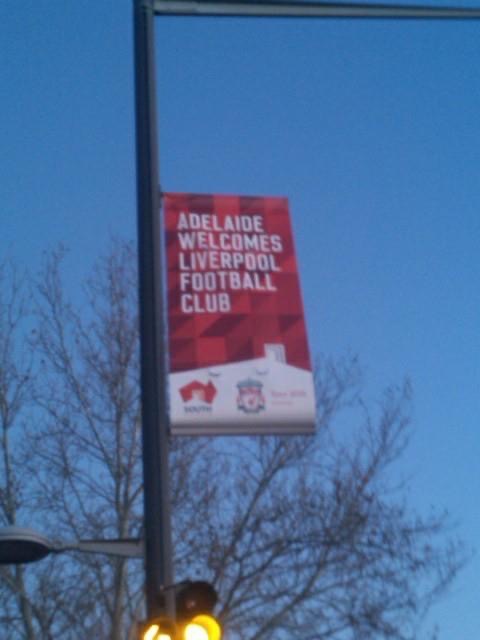
2015, Liverpool announce that they are going to be hitting the land down under. We left for Adelaide ASAP.

The interconnectedness of the fans coming to South Australia was mental. Being apart of an audience has drastically changed over the last century. This is what I learnt when we arrived to Adelaide in 2015. We have a YouTube channel for audiences to engage with media and use it to do things with their own lives, in accordance to the lecture. In accordance to the book Colours and Scarves, football fans identify with their team through buying merchandise. Evident when the audience engaged with the club in SA through the purchase of merchandise associated with Liverpool’s trip to Adelaide.

“the relationship between media concern, public interest and government action is a familiar one”- Turnbull 2010, “Imaging the audience” page 71. Boy oh boy does this statement ring true to the game. The South Australian government used the die hard Liverpool fans to advertise like crazy. Posters EVERYWHERE, and I mean EVERYWHERE, even in toilets advertising the game. This show a relationship between authority and individuals as they work together to ensure the overall success of an event through advertisement and profit.

IMG_0410

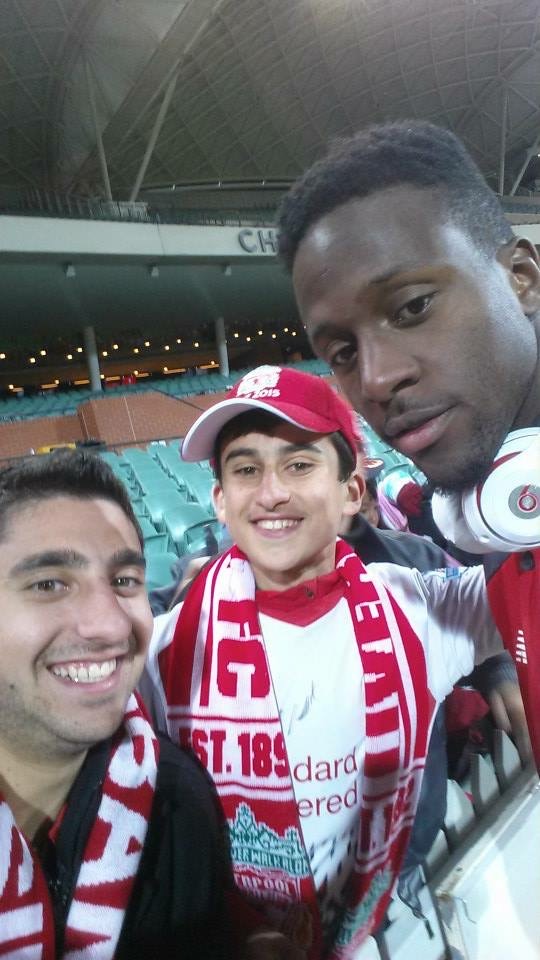
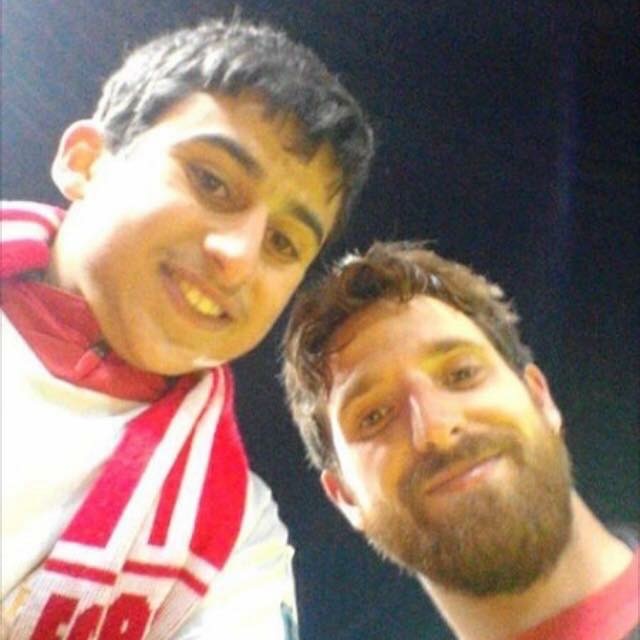
I met Divock Origi, the Barcelona comeback hero, and Joe Allen, who although isn’t in the team currently, still has the best beard in world soccer. You don’t believe me? here’s proof:

IMG_0084.JPGIMG_0092.JPG


As audiences work together to ensure everyone gets the most out of their experience, this doesn’t spark truth in some fans of the team. I remember, I could hear yelling, almost as if the players were right there, but, they actually were. I ran. I was stopped. My little heart was shattered, even more when this lady told me I wasn’t getting through. My persistence prevailed however, and my scarf was signed by Joe Gomez and Mamadou Sakho.

By far the best thing about the whole experience was creating a different audience. Whilst I attended the game as an audience, my video and photo footage on social media was viewed by other audiences, who were viewing me as an audience member. Some audienceseption here! Me singing, well more like screaming, the clubs’ song ‘You’ll Never Walk Alone’ for the first time in a stadium was 100% the highlight, I lost my voice and that was hard to explain to my school teachers once I came back from school.

So, if you want to be apart of a sports audience, just have a look at this experience, and understand the growth of audiences, media attention and that soccer really is the world game! The slogan of Liverpool ‘You’ll Never Walk Alone’ really does ring true within the audiences of soccer, as they are connected through the sharing of a passion of the sport.

Bibliography

Derbaix C., Decrop, A. and Cabbosart, O., (2002), Colors and Scarves: the Symbolic Consumption of Material Possessions by Soccer Fans, Catholic University of Mons, Belgium. 

Liverpool FC, Plan Your Visit to Anfield, Liverpool FC. Available at: https://www.liverpoolfc.com/corporate/partner-experience/plan-your-visit-to-anfield

Turnbull, S.E, (2010), Imagining the Audience,Crows Nest, Australia, The Media and Communications in Australia, p. 71.