The long argument between FIFA and Pro Evolution Soccer hit a new debate turning point as PES renamed and revamped to EFootball. EFootball is a free to play game on platforms and mobile offering a way cheaper alternative to their rivals FIFA, but has garnered bad reviews due to lack of authenticity, graphics, and rights.
This video game series has always been considered a ‘bad game’ due to their complete lack of REAL teams, authenticity and graphics.
Esports Insider
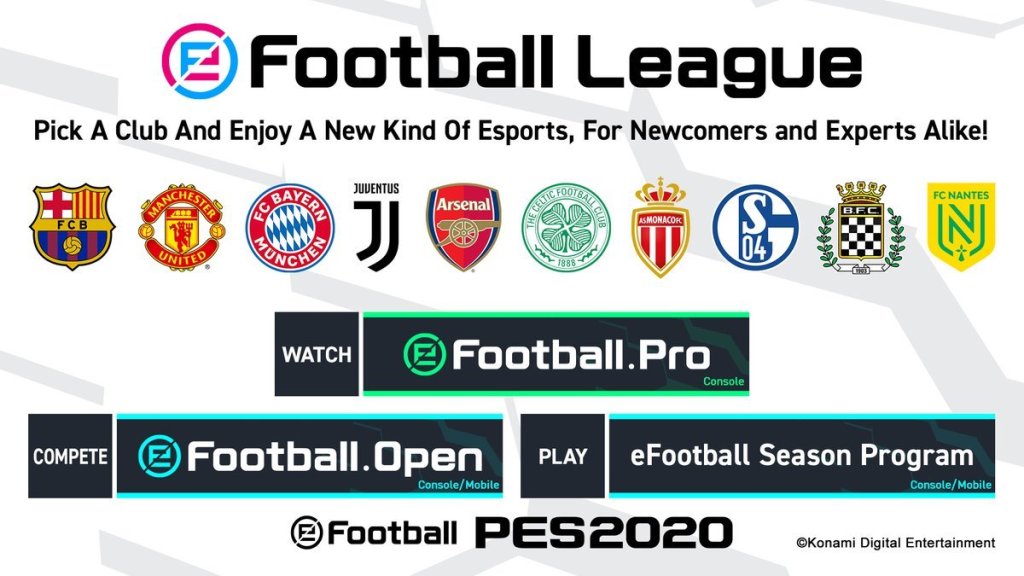
For example, Liverpool FC have their full rights in FIFA, but, in EFootball are named ‘Merseyside Red’ which clearly shows why this is considered a ‘bad game’. If we look at the above image it is clear that there are maybe one or two teams maximum from some of the best leagues in comparison to FIFA which have the whole league. Many clubs like Juventus had stints in this game, but returned to FIFA due to the better revenue that comes with the game. This complete lack of rights means fans of these clubs drift away from this game and go to their competitors to play with their favourite team.
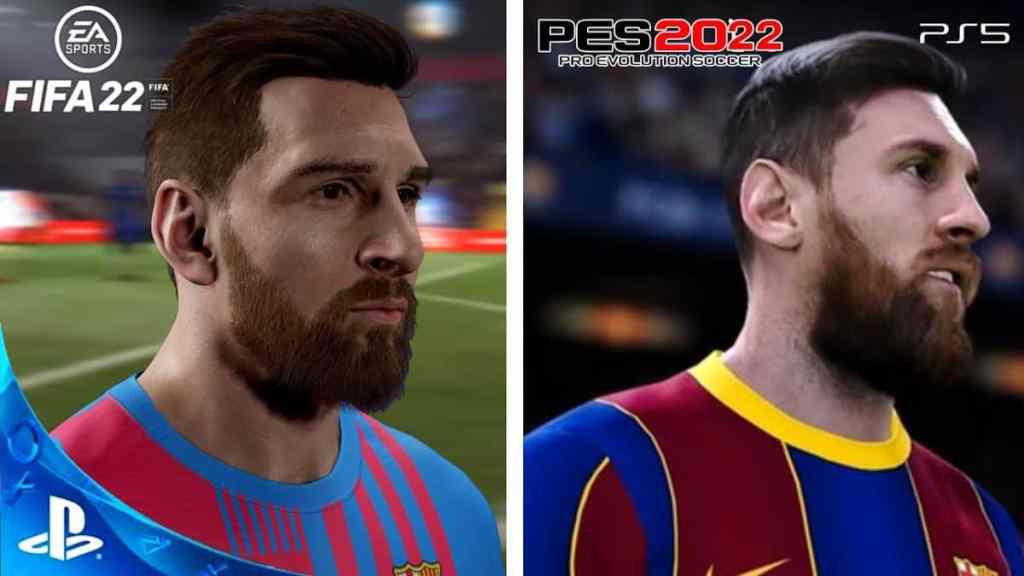
The online football video game market has always been FIFA dominated and EFootball does try to compete, but lacks due to the unrealistic capabilities of the game. Graphics matter, and the graphics of EFootball vs FIFA are completely different. Historically, PES or EFootball has had worse graphics in comparison to FIFA. However, graphics have improved over the years, the gameplay of the football games over the years has continued to be a ‘bad game’ and makes people buy FIFA every year over the EFootball or Pro Evolution Soccer games.
WEPC.
Ultimately EFootball has been dubbed a bad game due to limited licensing and abysmal game play to one which football fans want to play.
Queue the quote from Tow Mater, in this blog post we discuss an ancient game, (well a 15 year old game) in Cars Mater National. We take a deep nose dive into the technique, genre and fans of this game and discuss how this game can also be adapted to modern audiences of the game and movie franchise.
I chose this game as it was a game I used to play religiously due to my love for the Cars franchise.
Another key thing to discuss is the virtual community developed within the game. Cars Mater National can be described as an epistemic game, as according to D. Williamson Shaffer and others the players think like they are a member of the Cars community and get to control that community through the game. For me, a downside is not being able to play with Sally, my favourite character from the movie, however, exploring the town of Radiator Springs is still something that feels amazing within the community and subsidises the lack of original characters within the game. Not only do they get to meet their favourite characters of the movie, but interact, and even control them in the game making them feel as though they are one with the Cars community. This allows for a convergence of a real life community intertwined with a virtual community within the Cars and Cars Mater National community.
Exploring the characters like Mater, Lightning McQueen, and Filmore allow for users to feel excited to unlock their favourite characters, keep playing and ultimately finish the game. Having a history of knowing the movie and the characters makes the game more enjoyable, and brings back the framework from Huhtamo that games have history.
Ultimately, Cars Mater National is a great game which brings together virtual and real communities and is a great video game based off a movie with an endless amount of possibilities in place within the game itself.
Reference List
D, Williamson Shaffer, K R Squire, R Halverson, J P Gee, Video Games and the Future of Learning.
E, Huhtamo, 2005, Slots of Fun: Slots of Trouble: An Archaeology of Arcade Gaming, Handbook of Computer Games Studies.
Hello person reading this, I am Chrisos Mavromoustakos, I love my sport, music, my culture, and working on social media.
A key skill I have gained is the ability to communicate with kids, this has been further enhanced through my work at the AFL and refereeing. I am proud of this because whenever I rock up to work the kids want to see me and actually want to engage in the activities, I just think stooping to their level and becoming one of them makes them like you. Also, making them laugh and giving them nicknames just makes them want to interact with you more. This can hopefully mean for more sign ups of AFL and more interaction with it.
I am proud of this because it also makes me practise for the future within the work place and practise my communication within all ages.
Delivering this digital artefact in the form of an advertisement/skit brought a new perspective to the innovation as opposed to the fellow group members. Within this contextual statement it aims to frame and discuss the research involved and the overall aims in creating this work as the Digital Artefact.
Ads = $$$
Advertisements are a big business, involving massive amounts of profits. According to Pew Research, in 2020 alone the profit of US companies through digital advertising was $152,252,850,000. So, with this research it helped develop the project as in a world that is all about profits, it is no doubt that UniGroop will deliver profits through the means of advertising. With astronomical numbers like this, ultimately, the best form of recognition is through advertisement as seen through the numbers presented by Pew Research.
Crem of the Crem Persuasion
G. Dyer indicates that advertisements are subtle within the forms of persuasion used to grab the audience’s attention. These types of persuasion and influence leads to 81% of those aged 18 to 34 to make a purchase (K, Herhold). So, using these figures presented it was key that appealing to this audience will lead to further success for UniGroop as University students and scholars fall within this demographic bracket.
Re Flex
When making the satirical advertisement the aim was to appeal to University students. This was done through the University student struggling to make friends, which is a key problem within University students. 64% of students feel lonely at University (Project Unlonely). So, within this work the achievement is to lower this statistic by creating a University app that tackles friendship and education into one central app. The whole aim of creating this app is to reiterate the fact that this will be an easy transition from high school to University corroborated through the app.
Comedy Sells
According to Point Park University, if there are laughs, the product needs to be there the same amount of time as the laughs. Laughter releases stress, people do not want to watch ads but if they see a funny advertisement the audience will stay engaged. So, when laughter was said to be part of the video, the logo was added in an aim to keep the audience still engaged and have that achievement of selling the UniGroop idea.
Wrapping It All Up
All in all, using the research provided it was clear that a satirical advertisement for University students, not only appeals to that market but sells. The main aim was to then execute this onto the screen which was done through a comedic skit. Comedy sells and keeps audiences engaged, another key achievement in which UniGroop aims to instil. As mentioned in the original pitch, this app is intended to make Uni life easier, and with more than half of University students feeling lonely, this app aims to achieve a decrease in this statistic as they transition to a better and more smooth University experience, assisted through UniGroop. Conclusively, an app like UniGroop will bring success to the education industry as an innovation of ease and excitement.
Maps are a revolutionary way of exploring and examining the world. However, due to technological enhancements and political alignments maps can also be a brilliant way to deceitfully push a political agenda rather then lead a person to a place, in which a map historically operates as its main function. This critical response will discuss arguments of the question ‘are maps political?’ in both for and against backed up through the use of academic sources, visuals and examples which will in turn solve the answer to this question to show that maps are indeed political.
What is the definition of political? Political relates to the public affairs and governance of a country.
This quote below examines how maps are truly seen in the world, and how there are so many diverse languages around the world, there are many views around the world that shape the politics of the world.
Maps are a language, and give us a view on the world. (Henderson, G & Waterstone, M, 2009, Geographic Thought: A Praxis Perspective, Routledge, New York).
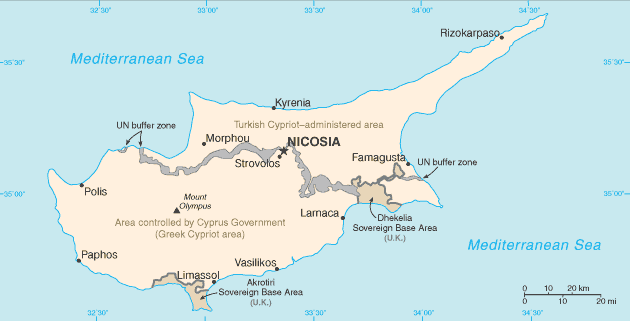
Maps are a tricky piece to navigate. This is where political perspective comes into play and can really discuss whether maps are political or not, based on what viewpoint is being examined. A key example is the country Cyprus, how a nation, can be divided into two and depending on what ‘ political perspective’ that is given, this map can be spreading a political agenda. The politics of a map is perplexed in a country like Cyprus as international governance has still yet to decipher the true politics of the island. Ultimately, the map further drives the political perspective of both sides as there are Greek and Turkish political agendas being displayed.
Geography IQ.
This map can be seen as political for both sides of the island, for Turkey, with a view of Turkish Cypriot-administered area rather than the self proclaimed ‘Turkish Republic of Northern Cyprus’, whereas for the Cypriot Greeks the whole map is a looks political. The occupation remains illegal to this day, and their perspective shows the map is political by simply having a Turkish Cypriot administered area.
For more clarity and understanding, this video goes into great depth on the Cyprus Dispute.
Maps are political, a person identifies with where they are on a map which can lead to a wide range of politics. What Y. Papadakis, N. Peristianis and G. Welz (Papadakis, Y, Peristianis, N & Welz, G, 2006, Divided Cyprus: Modernity, History, and an Island in Conflict, Indiana University Press, Indiana. ) discuss as a ‘hellenic identity’ is really the spark of the perspective which leads to the primary political perspective on the island, enhanced through the map that is present. A political identity also comes with the place on the map the person is from, this ‘hellenic’ identity is corroborated with the ‘Turkish Cypriot identity’ that also steps on the island. So-that, upon the issue of perspective, a map will always be political as two different perspectives and political alignments clash to find the true ‘meaning’ of the map. This true meaning of a map showing a place can be hidden, as a political perspective of people will look at the map, thus being told to identify this politics rather than on country as a whole. All in all, a map will always show a political perspective and identity will lead to maps always being political all over the world, specifically if there is conflict in set place.
There are different parameters into why these nations do not have street view, including, wars, barren roads and licensing this graphic alone. However, the nations that do not have ‘Street View’ can be seen, interpreted and displayed however by the following nations through politics. Especially if the politics are not aligned with a neighbouring country, e.g. Communism v Democracy. Ultimately, this example shows how ‘street view’ is not in itself political, however, someone will look at a map and gain a political perspective on the set place based on what they have been taught. This shows the negative side of the political maps argument, as it is not the maps themselves, but the political alignments of set people.
Wrapping It All Up
Conclusively, maps are ALWAYS political. Maps are dependent on interpretation, identity and representation of the nation being seen, which will always be interpreted through a political alignment and view. These politics are all altered and different depending on the persons pre-conceived notions of a certain place. This means that there is no definitive definition of a place as every person thinks differently of nations, especially if the nation itself has a confusing element to it like Cyprus. These thoughts are corroborated through politics, in which maps help to push. Therefore, whilst maps are useful in seeing the world, community and places, they are political as maps fail to display full transparency of all political alignments and depict one set view of a place around the world. Contrastingly, maps also show places on a map and people will always interpret the map based on politics regardless on if a map is there or not. Conclusively, maps will always be political as identity and political perspectives remain stagnant throughout generation to generation, which can also be bolstered through set maps around the world. Different maps will be shown around the world based on a certain political perspective regardless of whether the map company wants to remain ‘neutral’.
This is it, the contextual essay. The Digital Artefact is an online sports media platform, aiming to solve the problem of small sports corporations not getting as much recognition in comparison to the larger media corporations. This sport platform aims to show sports in a new setting around the globe with various platforms, through humour and positivity. This digital artefact, as mentioned in the beta and pitch aims to unite people with the beautiful connotations of sport. This is seen with a YouTube channel, Instagram, and sports magazine each addressing their own problems.
This project was developed because sports is a key communication point, and something which brings together people. Attention is also key, and according to L. Kane attention is one of the most important pieces of information within the digital age. This attention in the DA was used off inspiration by 433 and focuses on constant feedback and constant iteration of all three types of media.
The problem I am addressing for the YouTube channel is small size markets, the Instagram the league not getting recognition and the sports magazine the power of quick information and breaking news.
Each platform had different results of iteration.
Mavro Productions, focused on the long tail and allowing for the small media companies to function under the same umbrella of the large media companies. Since the beta, the same video has been uploaded, which opened a feedback loop and allowed for a different sport to be discussed.
Although this video did not amass the views, it created a conversation. Growing from local to global as a basketball page reached out on suggestions within the channel and allowed for a feedback loop to grow. J. Hall describes this feedback perfectly by indicating that training people on a complicated rather than a complex environment. YouTube is complex, and therefore any feedback to improve helps that said YouTuber receive that feedback.
The main learning curve from Mavro Productions is that the old content and sit-down videos should be iterated in a way that makes these videos more interesting, once again, bringing back the attention economy. People lose attention to someone just talking, so therefore, adding more life to a basic video will make people stay on the video.
However, people still like the basic content as this has led to a growth in subscribers and the 660-subscriber mark remains constant as more people want to see the old content regardless of if it changes. So, another learning curve is that even old content can remain if the content is changing.
The Cypriot League page has a scarcely different type of content being created. Polls, goals, and scores are shown to add constant feedback loops and free-flowing information flows. The local to global system of communication becomes key, as people from Cyprus, United Kingdom and Australia interact with the page and opens more curation of the page.
Something which is important is the followers to following ratio. My page only followers teams and professionals and shows that more legitimacy to the page, creating a more authentic look to the page.
According to stats from the Instagram page, of those who answered the poll, 60% of people who see the page are from Cyprus, while 40% are not from Cyprus. This shows that the problem of the league not getting recognition is growing as the market grows from national to an international stage.
According to T. Mitew and Travis Wall a swarm network has been created, not only is there a distributed network, there is also a centralised and decentralised network where all these nodes are in corroboration with the page.
What has grown within this page is a shared basic reality of loving Cypriot football which has been encapsulated in the page that has been created. This love is enhanced through the videos created, showing some of the best that the league has to offer in order to enhance its identity on a larger scale.
The main thing that was knowledgeable within the Cypriot League page is that constant uploading of content does not mean constant interaction, but having good content constantly leads to good interaction. Yes, the pages may not get any likes, but the stories are a great way of interaction, and these polls continue to grow and develop.
As mentioned in the Beta, constant iteration has allowed for an expediential jump in followers, which means that more news can be uploaded. As the followers have increased, a new section has now emerged as reviews have become a part of the channel.
The recent video has 800 views and what was learnt, based off the attention economy is that background music, focus on the shoes and flashy titles may allow for more interaction. Although focus is on the website, the other social medias help with the growth of the website.
Within this sporting magazine, not much feedback loops have been seen; however, constant ideation continues to be done on the website.
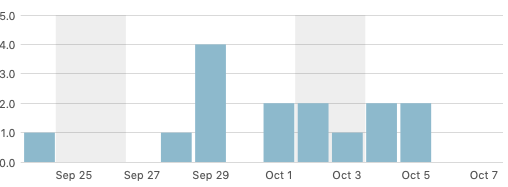
As seen in the picture below, views remain constant, which means that the audience still stays regardless of constant content being curated. As mentioned in the Beta, with the change in viewership, content has been created just minutes before the news has been announced to put a mark on the issue of small media markets not being quick enough to release news.
Ultimately, the DA will continue to grow and improve outside of this assessment through constant iteration and feedback loops. The YouTube channel will continue to focus on curating old and new content to engage with new and old audiences. The Cypriot League Instagram will create more polls, add more goals of the week and include more scores to make the local to global component grow. With this, the hopes of more recognition for the league will hopefully grow as well. Talking Sports will continue to deliver news, sporting content and reviews on the page as it grows dramatically as a key media production news organisation. This DA will hopefully become more monetised as more content is curated.
The Internet of Things is a term which alludes to the physical objects connecting within the technological universe. The Internet of Things is a global phenomenon and can be used for any sort of thing that has been created from water bottles to tissue boxes. Discussing the past, present, and future implications of the Internet of Things, will help indicate to the importance of this sensation and how it will continue to be crucial not just in life but the technological realm of data and information.
In a modern context, the Internet of Things started to gain popularity in the 2010’s. An explosion of data makes this happen, as local clouds of storage become popular, data becomes the only type of being to exist. Humans have become commodities, and therefore, means that their currency is data. T. Mitew indicates that the human body and everyday materiality are seen as data. The RFID Journal puts this common spin on the Internet of Things in an intriguing way, by stating that the economy and society are not based on ideas and information but on things.
The term ‘things’ is loosely thrown around within the Internet of Things. This toothbrush may be simple, but once this toothbrush is connected to the Internet they are actively participating in social exchange and rearranging patterns in the modern world. This is in accordance with J. Bleecker. Each object gets a unique address for this thing to be easily identifiable. All this, from a simple photo of a toothbrush. This transition of objects to social things appears as data within a computer. Therefore, showing how data is an intrinsic and integral part of the Internet of Things.
These things can also have a semantic interface for humans. Whether these are cars, phones, or a tablet. These things become a whole universe of data catered for the humans to use on a day-to-day basis. Humans may control the interface, however, the Internet of Things is continually grabbing data and turning these ‘things’ into material. T. Mitew elaborates that these devices stores and processes information locally on a cloud. This example can be seen within Apple products. A cloud is a whole information of things stored in one place which comes up as an interface for humans, in Apple’s case through the iCloud system. Then, from this cloud system context data becomes the object as a photo, video or thought can give the human a reason to access this cloud.
The Internet of Things leads to a shift in the role between physical objects and humans. What was once a key dominance of humans over objects has now shifted as objects have more power over humans. This is seen through the key dynamics of data that objects take, a simple calendar can now become digital and absorb all the data that the human embeds. Instead of humans using objects, objects use humans to redefine and reshape the power dynamic as well as consume the data that the human has leaked from the Internet of Things. Ultimately, this shows the power of the Internet and how simple objects act as the main front runner of data collection.
Technology will become so absorbed in our life, that is currently is, that in the future it will no longer be seen what even technology is or not. As commodities and objects become tangible objects, the actual presence of things will disappear as a world will continue to shift to online parameters. M. Weiser predicted this in the late 1980s, that technology will be a part of the background life, however this has become apparent with a huge twist. Now, objects become the background of life as the Internet of Things absorbs objects and makes it its own. Objects will become online footprints and continue to absorb data. Credit cards, vouchers and money are all online pieces of data that were 20 years ago, all on paper. The future will make all these types of objects become stronger and more influential as connected objects will become tangible. This will remove all previous facets of paper and handheld objects and turn everything into one place as the ‘data being’ that is being created continues to grow and elevate.
Conclusively, the Internet of Things came into play in 1999 as a term to attract new technology. This term has grown and developed into an eruption of data in which, objects and data corroborate to create control of humans through the Internet. The Internet of Things has a semantic value for humans through clouds and context. The Internet of Things continue to show a different power dynamic between objects and humans. All these key features will be fundamental for the future implications of the Internet of Things. Interface will change and technology will become absorbed into life that all tangible objects will move to a technology-based system. The Future Networks and corroboration with the Internet of Things is a key phenomenon which will continue to be present in the future as well as in the present as data continues to expand and the foundations of the Internet continue to be built based on technological advancements.
1003 WORDS.
Bibliography
Bleecker, J, 1993,Why Things Matter: A Manifesto For Object Networks.
Dua, N, White iPhone XR, Pexels, viewed 20th October 2021, pexels.com/photo/white-iphone-xr-3586249/.
Grabowska, K, Photo of Toothpaste on Toothbrush, Pexels, viewed 20th October 2021, pexels.com/photo/photo-of-toothpaste-on-toothbrush-4202927/
K, Ashton, 2010, That ‘Internet of Things’ Thing, RFID Journal.
The Digital Artefact which will be constantly ideated and curated is one which has been a work in progress for many years. The content consists of an Instagram page, a YouTube channel and a website.
Cypriot First League English
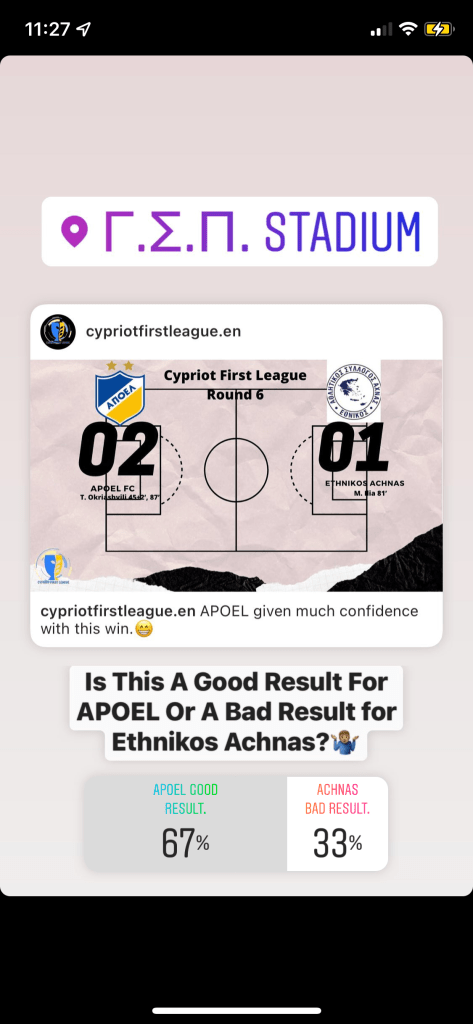
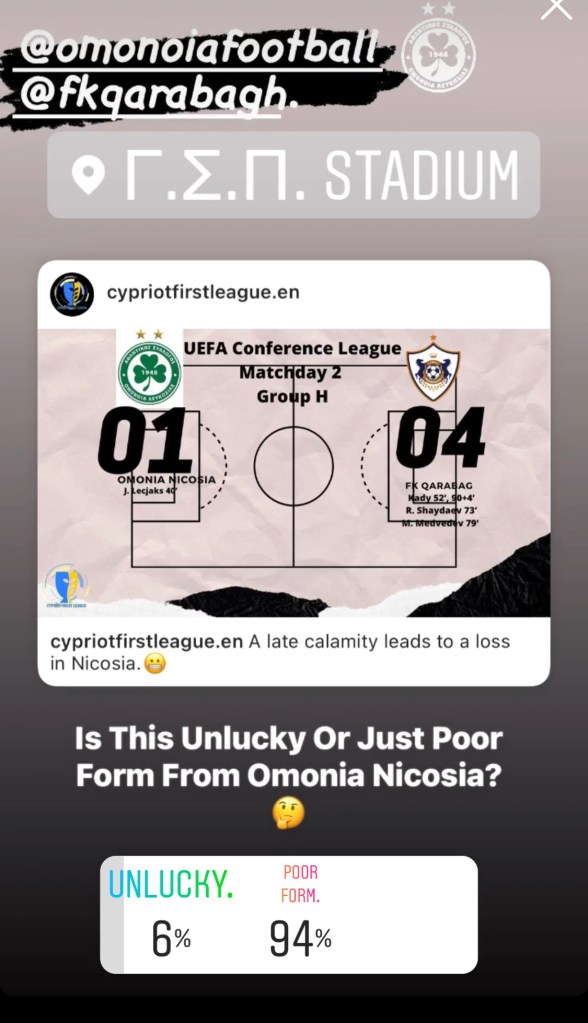
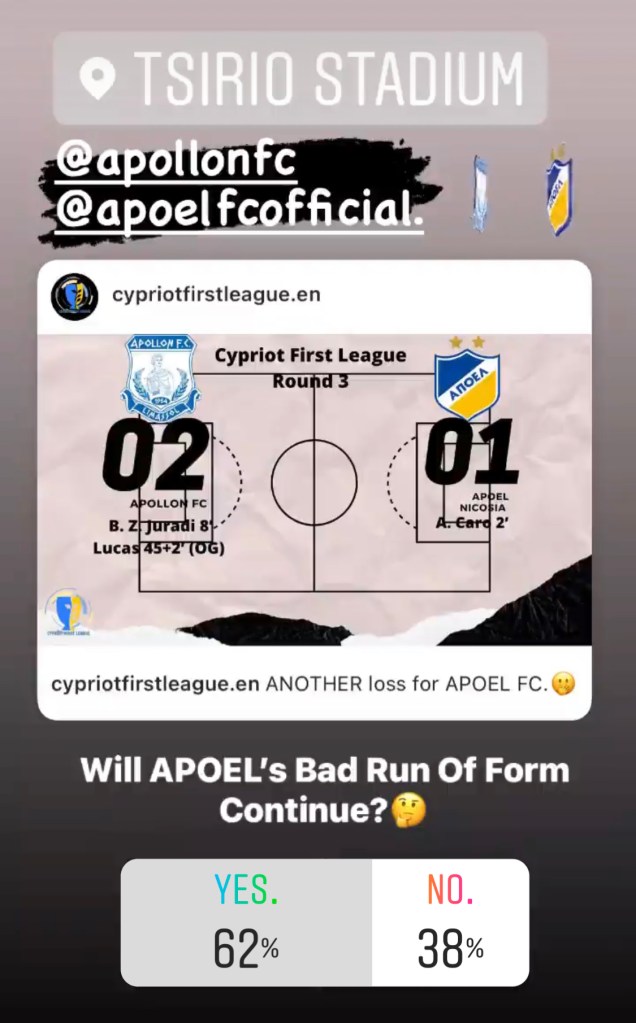
Upon addressing the issue of the league not being recognisable, an Instagram was created in order to ideate content for the page. On top of this, to establish a constant feedback loop within the page and show the free flowing information present throughout. These feedback loops were present through Instagram polls. After posting and ideating the score, the location of the game, the teams and the post would be put on a story as well as a question for viewers to answer. This leads to actors of the page being unparalleled opening a global interaction of curation on the page.
Polls on the Instagram page.
Upon doing these stories, I saw a jump in not only followers but audience engagement. Therefore showing that this ideation was the influential way for growth. This way, there was constant feedback loops present throughout. I saw that this type of engagement was key and helped made the content better, so, I decided to iterate my content in this way in order to continue constant feedback loops.
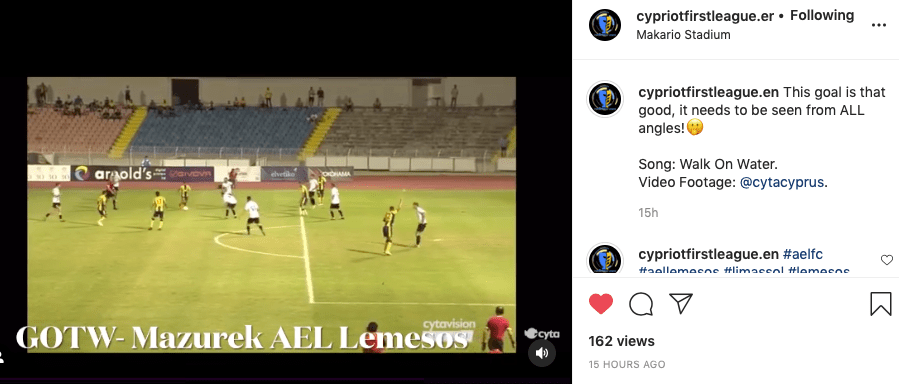
With this page the Goals of the Week have continued and the views show that this type of iteration is still influential for the followers of the page.
Mavro Productions
This media iteration focused on breaking the long tail and paving the way for a small sports media company to be noticed. This was done through iteration of content and broadening the scopes of sports. However, the latest video has not amassed the views, it has however, opened up a dynamic of a feedback loop.
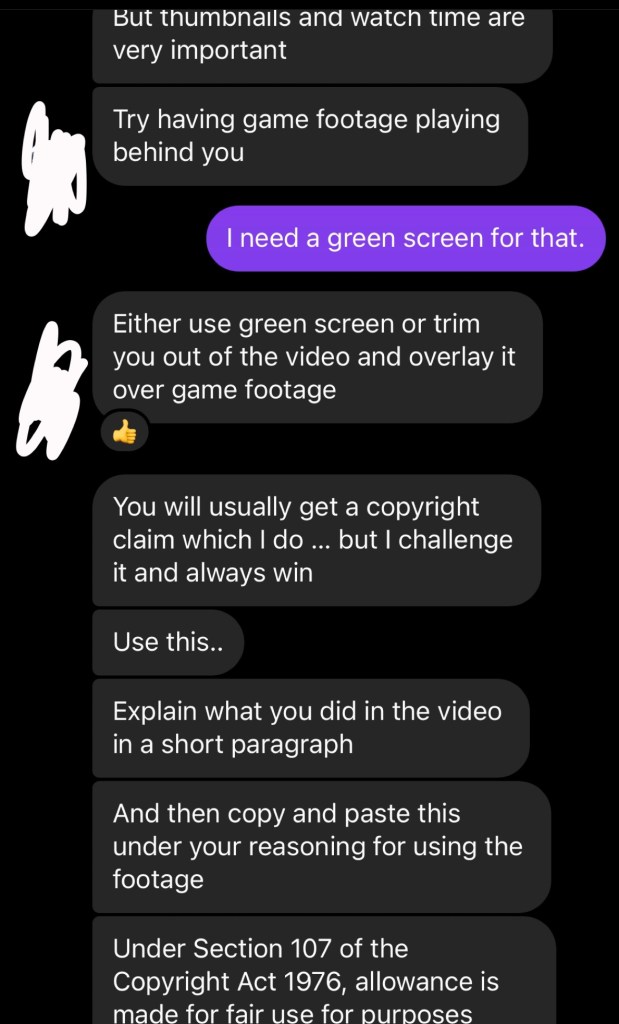
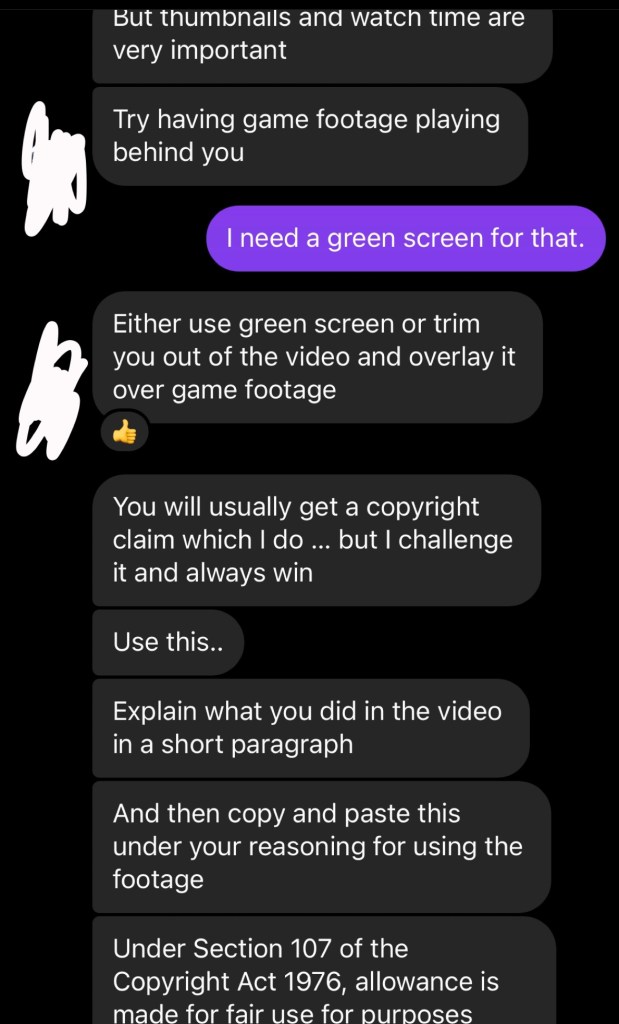
Feedback which was given was based upon thumbnails. Another small media production company give feedback on thumbnails and therefore, has helped with the future iteration of this channel. This feedback will help drastically as it provides advice for the future direction of the channel and the career path which wants to be possessed.
Talking Sport
The final piece of the DA puzzle is the TS website. Constant iteration has had a massive leap in followers, with that in mind, the jump has helped with further curation and ideation of content as the news is delivered much quicker than it used to be. For example, posting and creating a story about a new signing minutes after it has been announced or even before.
TS Instagram growth.
A three step process of writing the article, then sharing it on Facebook with a short description and picture on Instagram has helped with the overall growth of the website.
This project will continue to be worked upon, adding more feedback loops through polls, encouraging audience engagement with thumbnails and writing on time articles to attract even more followers to the sporting website.
Bibliography
J, Weismueller, P, Harrigan, 2021, Organic Reach on YouTube: What Makes People Click on Videos from Social Media Influencers?, SpringerLink.
R, L, F, Coelho, D, Santos de Oliveira, M, I, S, de Almeida, 2016, Does social media matter for post typology? Impact of post content on Facebook and Instagram metrics, Emerald Insight.
In this analysis the concept of global information flows will be examined and observed and how this idea has a massive contribution to the past, present, and future networks of media.
Looking at global information flows it is imperative to discuss how the Internet started as this is the root cause of global information flows. In accordance with Cerf, V and R. Kahn the history of the Internet first started in 1962 with J.C.R Licklider predicted that a global interconnection of computers would become a common trend around the world. The Internet back then was a system of networking and still is to this day, showing that even the Internet back in the 1960s had the same visions as the modern-day Internet. Constant information flows are a key idea for the Internet. This is also explained by F. Stalder. Someone can create versions of the same material which can be rebranded and recreated around the world in a concept of exchanging. This not only explains the history of the Internet but also discusses the current flow of global information and communication within a paradigm of media consumption.
An explosion of communication is highly relevant with global information. As messages are communicated, they become increasingly spread and this has become a recent development within the Internet. What is local information could become global in a matter of minutes based off the patterns of flowage and is a key trend within today’s information flows. This explosion of communication development can be linked with the concept of ‘always on’ by M.Gregg. Whether we are not physically online, information is flowing around the world, either about individuals or corporations which are used to engage with networks once they are being used by a person. This global information flow industrialises material transmission and how it is processed. Ultimately, the way users engage and use the Internet and media through this ‘always on’ idea becomes an industry as corporations use the flow of information as a means of commercialisation. For instance, a simple message to a local friend about a concert overseas becomes a key part of that person’s information flow in their digital and online footprint, this then explains the concept of global information flows. The global information flow is crucial for messages to flow and become processed from one online mode to another, whether this is from a laptop to a tablet to a phone.
A current Internet development is social media and how these platforms cause a global information flow. The main social media’s, seen from the acronym coined by T. Mitew as FAANG, Facebook, Amazon, Apple, Netflix, and Google are all key players within these flows. R. Reeve explains that the more global a brand comes, the more it changes its business model. This idea is also intertwined with global flows of information. Our social lives are hand in hand with technology, another key point from R. Reeve. A key example of a global flow is Facebook. Facebook has changed its functions from simply just a social media site to a place to sell items and organise events. The global flow from a simple like has led to the overall enhancement of a current Internet development of social media to become a vast part of people’s lives without them even realising, through new communication nodes and flows. Therefore, as social media develops as a social media it continues to grow and shape global information flows. The more that flow, the more changes and features social media websites add which is in conjunction with global information flows.
Another key feature global information flows are that they require low network transaction costs. This explains how the more modes that are connected, the more it scales as a transaction cost. Knowledge continues to be a main force of production. What global information flows know about users in turn shapes the way that these flows interact and coordinate content to their users. T. Mitew explains that the larger and more centralised a network the higher its transaction costs. Therefore, a global information flow does not consist of one mode, but of numerous modes of intertwined webs of connectivity. This includes the likes of Amazon and Ebay, as they have one distinct product. Connectivity. Ultimately, a present feature also includes the low network transaction costs that global information flows possess. They not only work together but link together through the knowledge of production and data to create global information flows.
A future implication of global information flows is the emphasis on ‘attention’. Attention is a current paradigm and according to L. Kane is a whole new ‘economy’ within an Internet realm. M. H. Goldhaber wrote that the global interaction flows are shifting from a material-based economy to one based on the capacity of attention. K. Kelly indicates that this new economy is based on intangible things. As attention is so intangible, so do ideas, information, and relationships as they all become interlinked. For global information to flow, it must be attentive to a wider audience and spread in a free-flowing way. Although information is easily accessible and has no value, it wants to have a value. This value will all have to do with the attention of an audience as a future implication of global information flows. All in all, attention is a current implication and a future one in terms of the global flow of information. Attention has become an economy and ultimately shapes how information is transferrable from a local audience to a global audience.
Conclusively, global information flows have stemmed from the early stages of the Internet to the present tense of social media and low transaction costs. These have key features of an explosion of communication and attention. These key features will be integral to the future directions of global information flows and how they remain constant and consistent throughout the growth of the Internet. Global information flows are a key technique and practise within future networks which will continue to be present in the future as well as in the present.
WORD COUNT: 1009 WORDS.
Bibliography
Bradwell, P, Reeves, R, 2008, Network citizens power and responsibility at work, DEMOS.
Gregg, M, Function Creep: Communication technologies and anticipatory labour in the information workplace.
Kane, L, 2019, The Attention Economy.
Kelly, K, 1999, New Rules for the New Economy.
Mitew, T, video recording, 2020, The chronic task of sorting: information flows and liquid labour.
Mitew, T, video recording, 2020, Feudalism 2.0: living in the information stack.
Leiner B,M, Vinton G,C, Clark, D,D, Kahn, R,E, Kleinrock, L, Lynch, D,C, Postel, J, Roberts, L,G, Wolff, S, Brief History of the Internet, 1997.
Stalder, F, 2005, Open Cultures and the Nature of Networks, New Media Center.
My Digital Artefact is a continuation of my sports media publication which consists of a YouTube channel an Instagram account and a website. I will work on the continuing ideation and uploading content of all these projects.
The YouTube channel ‘Mavro Productions’ focuses on football and the beautiful connotations of it, the continuation of vlog content will help reach my goal, whilst also intending to make new content to cater to more than just the original audience. This future direction will be done by continuing previous experiences of interviews with high calibre players and vlogs showing exclusive content from the games I attend. This aims to be done through a constant ideation of this type of content in order to reach the future goal of 700 subscribers.
My Cypriot League page on Instagram will aim to continue ideating and curating the scores, transfers and general content. Frequency and consistency allows for more visitors to the page. This allows for simple and fast content to constantly be flowing throughout the page to allow for more viewership and followers, which will aim for the future direction of reaching my followers goal to be achieved. Previous experiences of this page point towards the more content, the more followers that are being attracted.
The Talking Sports website will allow for ALL sports fans to read up on all the latest news in a quick and easy manner, continuing this will further the audiences as they scroll through the rest of the website. The audience expands for this website to motorsport, basketball, and football fans. These sports will attract more views and will see a constant loop of content to please and attract new and old audiences. The future direction of this page is to allow for more streams of content, whilst having engagement on the social media pages. This aims to be done by releasing content at the same time or before the mainstream media. Previous experiences show that, the more content is being released the more people can read this website, which was not done as much as it is now.












 Mavro Productions