Fairfax v Google- A YouTube Copyright Overview

What was this lawsuit about?

In March 2007, Viacom sued Youtube and Google, on the grounds that they should be responsible for copyright violations committed by Youtube users and creators. The lawsuit lasted 4 years, and sought over $1 billion in damages. Viacom targeted over 100,000 Youtube videos for takedowns, however, this was controversial, as some videos among the 100,000 were not actually owned by Viacom, and were just home movies that didn’t need to be taken down. Not long after the lawsuit was ratified,a number of class action lawsuits were filed by music producers and other entertainment producers against Youtube, based on the same theory created by Viacom in 2007. 

 What was the final outcome of the case ? 

On June 23 2010, the judge decided that Google was protected by the Digital Millennium Copyright Act, a law passed in 1998 creating a “Safe Harbour” to shield them from liability. They were protected by the Act despite evidence of intentional copyright infringement. The judge held that while Google was aware of copyrighted material they could not specify or monitor if clips were uploaded with permission or illegally, and policing every upload would “contravene” the operation of the Digital Millennium Copyright Act. 

How does YouTube deal with copyright matter? 

YouTube deals with copyright matter in various different ways as copyright is taken extremely seriously for YouTube. Videos which have copyrighted content are taken down.This is done through a Content ID robot. This robot detects if there has been any copyrighted material within a video, as soon as the video is uploaded. In accordance with the Digital Millennium Copyright Act. This act was enacted in 1998 by the US government. This was made to balance the copyright owners and users and investigate any infringement within the online world. YouTube must take down any video in which a publication sees an infringement in the video. YouTube is not responsible for someone copyrighting someone else’s content. If a video has even a second of a song, the label will flag it, adding a tag at the bottom of the video as to who flagged it and what the song is called. For example,  a lyric video made by a random user, rather than the actual artist or publication, there will be the song title and who it is owned by at the bottom of the description. This allows YouTube to protect the rightful owners of those who own the song. Allowing for the user to have that video demonetised as it breaches copyright law. This is all done through the Content ID mechanism, which is done automatically. 

How does Youtube deal with fair use? 

Many creators think that if they state clauses such as ‘credit to the owner’ or ‘no infringement intended’, fair use is automatically applied. Unfortunately, there is no term or phrase that once stated that will preclude or protect users from a copyright infringement. Each use is judged on an individual basis, however there are certain protections and tips that may prevent misuse or exploitation of original content resulting in copyright. This is where the legal doctrine of fair use applies. 

Fair use protects a consumer’s right to use a portion of copyrighted material without notifying or getting permission from the original owner. This allows creators to use material and sources creatively, however there are still dangers and restrictions to how the material may be used. For creators on Youtube who have violated certain copyright restrictions, implications such as videos being taken down from the platform, accounts being banned, motitisation removed from videos and even legal implications have all been awarded to those who violate copyright restrictions.  

However, if you do decide to use someone else’s material there are a few handy steps that can help you decide whether your use is appropriate and protected by the fair use doctrine. 

Step one, look at what you are planning to do with the content. What is the purpose or character of the use? Courts may consider whether your use of the content is transformative, by way of adding new meaning or substance or if it is simply a copy of the original. This question may be answered by addressing this question – Is your use commercial or educational?

Step two. This step  includes looking at what the nature of the copyrighted material is. Is the material you are using based on fact or fiction? In most cases, there is more protection around works of fiction, including film or tv compared to live footage or news coverage. This is also the case with published and unpublished works. 

Step three, how much of the original material are you showing in your media? Although there is no recommended or restricted amount of usage you may broadcast, showing smaller snippets of the material is more likely to be protected under fair use. However, this may not be the case where the ‘smaller’ portions used are considered the main part of the original work. This is unlikely to be considered as fair use. 

Step four, the final step is to ask yourself, does your video serve as a copy or substitute for the original one? If your content is likely to overshine the original work or receive a greater benefit based on the copied content, then your content will likely not be covered by fair use.

I also recommend checking out this video for some frequently asked questions about fairuse → https://www.youtube.com/watch?v=1PvjRIkwIl8 


In what ways did the different appeal stages of the cases change the outcome?

The first appeal occurred two years after the lawsuit was contested in court, where a Federal judge ruled that ‘Youtube was protected from any legal ramifications under Section 512 of the Digital Millennium Copyright Act (DMCA)’. This was where Viacom appealed the decision in an attainment to prove that the material that youtube had published was knowingly copyrighted. Following this, they were granted permission for the case to be reheard in front of a jury, as a result of the United States Court of Appeals for the Second Circuit accepting the appeal. However, Youtube again walked away ‘innocent of any copyright breach’, so in response, Viacom has expressed their intention to appeal this.

 

Goal, Touchdown, Pass!

In the new era of social media and news coverage, sport has become an even bigger entity. Various organisations, corporations and companies engage within social media to deliver news, to grow their audience.

This new era of sport has had an overarching effect on me and which media publications I follow on social media to access my news. Reputable companies such as ESPN, Fox Sports and Bleacher Report all have apps and social media in which I gain my news from. These media publications and their social medias are controlled by professionals who cater to a specific sport. For instance, on Bleacher Report you can set your favourite teams and leagues to get news catered to you, based on the professionals’ research skills. Sharing videos on social media allow for a wider spread of audience and for a simple recap of the news based on shows on set publication. This is key, allowing for a further spread of a corporation from a local to global scale.

Who controls these media entities matter as they have a huge reputation on delivering sports news worldwide. If a company is reputable online and looks to expand, it matters who controls the company in order to keep the longevity of the company as well as its reputation. In accordance with, Nicholson’s book Sports and the Media: Managing the Nexus quotes in page 168 that “the amount and quality of media coverage is dependent on factors such as the level of the sport organisation (national, state, regional or local)”. This is key, as many sports which may have a national interest may turn into a worldwide interest. A key example of this is the emergence of the NBA over the last 20 years and its worldwide appeal. Therefore, it highly matters who controls these media companies so that those who live overseas have the same reach for the sport or team they follow as those who live locally within that sport organisation’s town. For me, I want to know the same news for my team Liverpool as someone who lives over there. Therefore, whoever controls their socials has a responsibility to deliver the news ASAP, so that in all time zones people can wake up to the news, allowing for a universal spread of information.


ESPN, Bleacher Report and Fox Sports have never really been involved in any trouble or scandals. With their track record, and Bleacher Report producing exclusive content for fans through players, I have a massive trust in the news sources. ESPN delivers news from the US straight to Australia, showing replays of shows and sharing stats about all sports. Americans love their stats. This instant share through their social media and channel allows for people in this country to be united with an international audience, and this way I trust the news publication. Fox Sports are a reputable company, who I have worked closely with, so I trust them completely and their sports analysis as it is by former professionals and those who have studied the game. Listening to top individuals allows for a better understanding of the sport, and a further trust in the news corporation.

Overall, media control is important for the further spread and influence of the company worldwide.

References

Nicholson, M, Kerr, A and Sherwood M, 2007, Sports and the Media: Managing the Nexus, London and New York, Routledge, page 168.

Mangalassery, M, Pixabay Photos, silhouette of a boy playing ball during sunset, photograph, accessed 16th of April 2020, “https://www.pexels.com/photo/silhouette-of-a-boy-playing-ball-during-sunset-978695/&#8221; rel=”nofollow”>Pexels.com</a

silhouette of a boy playing ball during sunset
Photo by manu mangalassery on Pexels.com

Breakfast= the hardest decision of the day.

23/03/2020

2RUwnkYptf2hnnu4LzaKRX-1200-80


Like our thoughts on Vegemite in Australia, whether you love it or absolutely hate it, that is the same within Marmite in the UK. Vegemite is a cult hero in Australia, with all foreigners making the poor decision to try the outrageous food. Marmite is also the same in the UK, sparking attention in all parts of the region and like Vegemite is in contention for either the most diabolical thing we have ever tasted, or the most underrated piece of food. Ever.


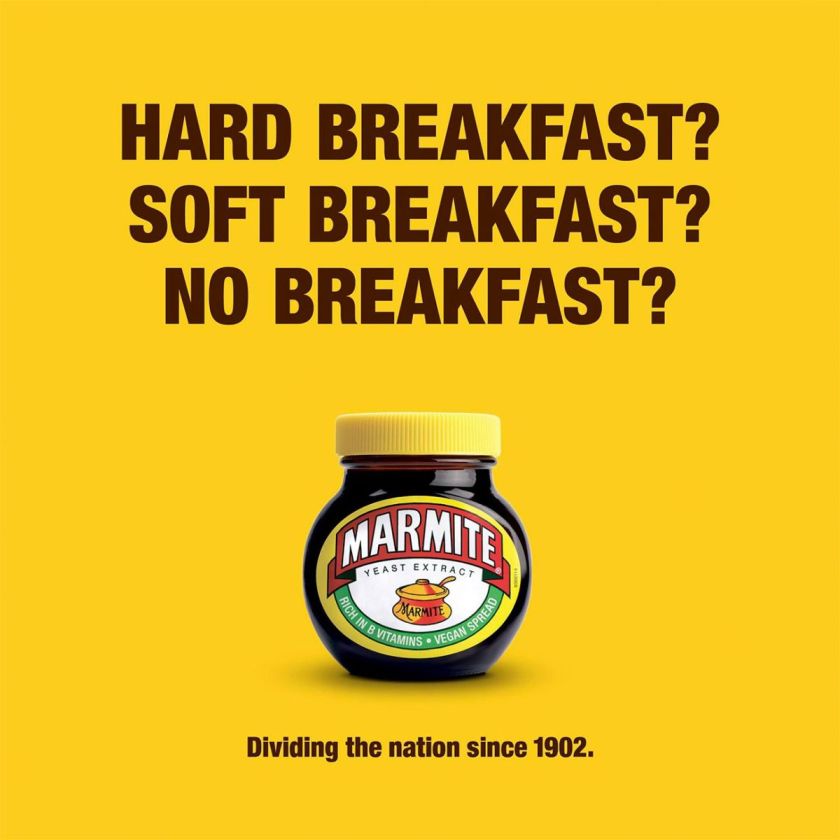
This advertisement represents the complexity of such a simple product such as Marmite. It shows how opinions can make or break a company or product. This advertisement really shows an emphasis on breakfast in the UK, which has been linked as the most important meal of the day. We all know how famous English breakfasts are, but do they consist of Marmite? That’s exactly what this advertisement is representing, the differing opinions that plague the nation. These opinions have been dividing the nation since 1902, showing that Marmite is clearly represented in UK history and is an important part of icebreakers, much like the ones we all went through in the first week of uni. As learnt about in the lecture, this advertisement is key in Laswell’s Mode of media encoding. The communicator, which is Marmite is saying that breakfast, which is a key part of the UK, is an essential part of the day which is topped off with Marmite. This is done through the channel of a still advertisement, to the receiver of a UK audience, with the effect being quite obvious, to sell more Marmite products. Duh.


This advertisement can mean many things:

  1. The United Kingdom have a different variety of breakfast options that we should all try, and Marmite is a key part of all breakfast options.
  2. Their division of the nation is an important part of their culture and can only be an experience that kids from the UK get, which I crave!
  3. Marmite are a key ingredient to all people who love their breakfast, whether its hard or soft. Or they might hate it and have no breakfast at all. Because, as it has been suggested, Marmite is quintessential for breakfast in the UK.
  4. Marmite is actually really bad, and this marketing tool is a desperate plea for help by the company, hmm, I don’t think so.


This advertisement can be read in numerous ways, it can be seen as a learning guide on breakfast. If you want a hard or soft breakfast or no breakfast, Marmite will always be there for you, almost like how a soccer ball is key for a soccer player training, so is Marmite for all breakfast goers. It can also be seen as a controversial item, with their slogan “dividing the nation since 1902.” Not only can this sell products but adds a common trait to the people looking at the advertisement who agree with the statement, basically a love hate relationship.

Whether you love or hate Marmite or Vegemite, their intentions to sell an audience can be done in numerous ways, whether it’s to aesthetically please their audiences taste buds, or make them cringe at the even thought of eating it for breakfast, the most important meal for the day.


Corner Taken Quickly


2008 was the year when soccer became an interest, which would spiral to a passion. Liverpool FC were the team that would ultimately cause mix emotions of happiness, sadness and anger for the rest of my life.

A rule becomes apparent when supporting the club, you must see your team play at the home stadium, the club even provides a guide to visit the stadium. Judging by the countless jersey and my extreme lack of sleep when match day is on I don’t think I had any plastic in me.

2015, Liverpool announce that they are going to be hitting the land down under. We left for Adelaide ASAP.

The interconnectedness of the fans coming to South Australia was mental. Being apart of an audience has drastically changed over the last century. This is what I learnt when we arrived to Adelaide in 2015. We have a YouTube channel for audiences to engage with media and use it to do things with their own lives, in accordance to the lecture. In accordance to the book Colours and Scarves, football fans identify with their team through buying merchandise. Evident when the audience engaged with the club in SA through the purchase of merchandise associated with Liverpool’s trip to Adelaide.

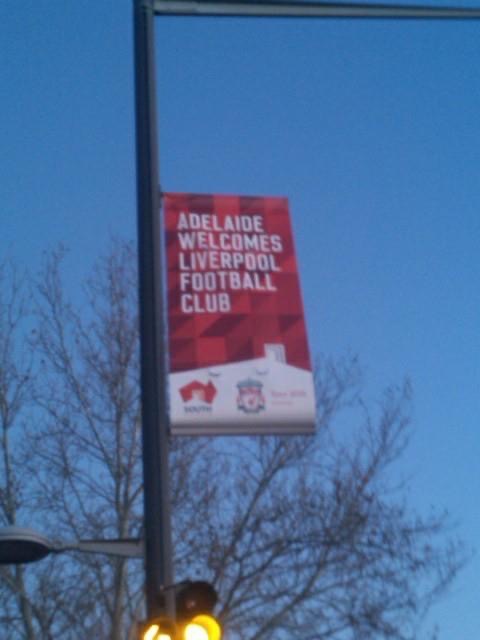
“the relationship between media concern, public interest and government action is a familiar one”- Turnbull 2010, “Imaging the audience” page 71. Boy oh boy does this statement ring true to the game. The South Australian government used the die hard Liverpool fans to advertise like crazy. Posters EVERYWHERE, and I mean EVERYWHERE, even in toilets advertising the game. This show a relationship between authority and individuals as they work together to ensure the overall success of an event through advertisement and profit.

IMG_0410

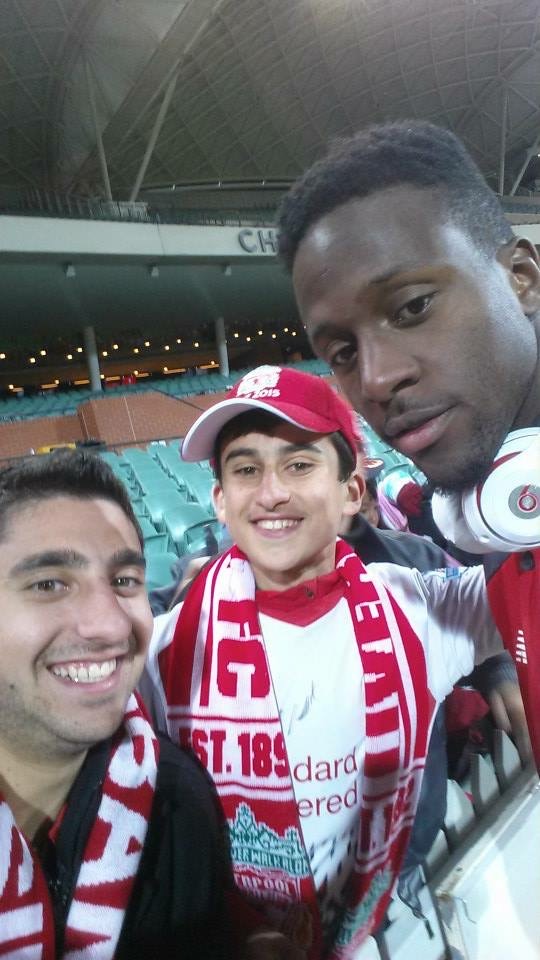
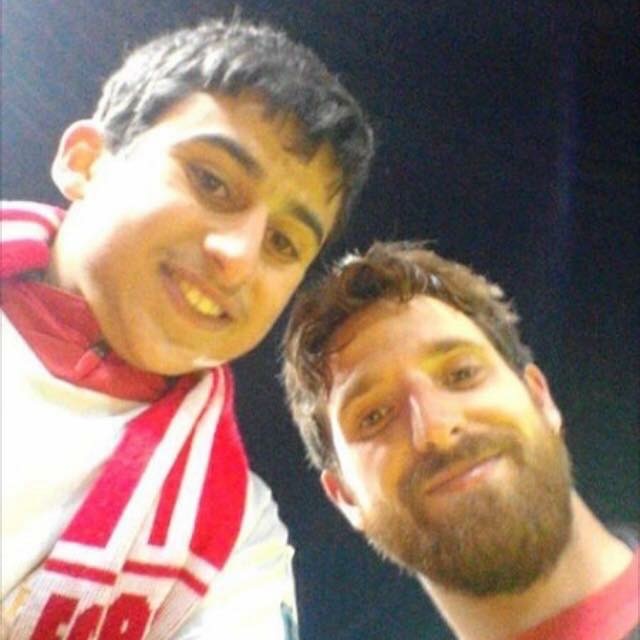
I met Divock Origi, the Barcelona comeback hero, and Joe Allen, who although isn’t in the team currently, still has the best beard in world soccer. You don’t believe me? here’s proof:

IMG_0084.JPGIMG_0092.JPG


As audiences work together to ensure everyone gets the most out of their experience, this doesn’t spark truth in some fans of the team. I remember, I could hear yelling, almost as if the players were right there, but, they actually were. I ran. I was stopped. My little heart was shattered, even more when this lady told me I wasn’t getting through. My persistence prevailed however, and my scarf was signed by Joe Gomez and Mamadou Sakho.

By far the best thing about the whole experience was creating a different audience. Whilst I attended the game as an audience, my video and photo footage on social media was viewed by other audiences, who were viewing me as an audience member. Some audienceseption here! Me singing, well more like screaming, the clubs’ song ‘You’ll Never Walk Alone’ for the first time in a stadium was 100% the highlight, I lost my voice and that was hard to explain to my school teachers once I came back from school.

So, if you want to be apart of a sports audience, just have a look at this experience, and understand the growth of audiences, media attention and that soccer really is the world game! The slogan of Liverpool ‘You’ll Never Walk Alone’ really does ring true within the audiences of soccer, as they are connected through the sharing of a passion of the sport.

Bibliography

Derbaix C., Decrop, A. and Cabbosart, O., (2002), Colors and Scarves: the Symbolic Consumption of Material Possessions by Soccer Fans, Catholic University of Mons, Belgium. 

Liverpool FC, Plan Your Visit to Anfield, Liverpool FC. Available at: https://www.liverpoolfc.com/corporate/partner-experience/plan-your-visit-to-anfield

Turnbull, S.E, (2010), Imagining the Audience,Crows Nest, Australia, The Media and Communications in Australia, p. 71.