The Last Dance

This is it, the contextual essay. The Digital Artefact is an online sports media platform, aiming to solve the problem of small sports corporations not getting as much recognition in comparison to the larger media corporations. This sport platform aims to show sports in a new setting around the globe with various platforms, through humour and positivity. This digital artefact, as mentioned in the beta and pitch aims to unite people with the beautiful connotations of sport. This is seen with a YouTube channel, Instagram, and sports magazine each addressing their own problems.


This project was developed because sports is a key communication point, and something which brings together people. Attention is also key, and according to L. Kane attention is one of the most important pieces of information within the digital age. This attention in the DA was used off inspiration by 433 and focuses on constant feedback and constant iteration of all three types of media.

The problem I am addressing for the YouTube channel is small size markets, the Instagram the league not getting recognition and the sports magazine the power of quick information and breaking news.

Each platform had different results of iteration. 

Mavro Productions, focused on the long tail and allowing for the small media companies to function under the same umbrella of the large media companies. Since the beta, the same video has been uploaded, which opened a feedback loop and allowed for a different sport to be discussed.

Although this video did not amass the views, it created a conversation. Growing from local to global as a basketball page reached out on suggestions within the channel and allowed for a feedback loop to grow. J. Hall describes this feedback perfectly by indicating that training people on a complicated rather than a complex environment. YouTube is complex, and therefore any feedback to improve helps that said YouTuber receive that feedback.
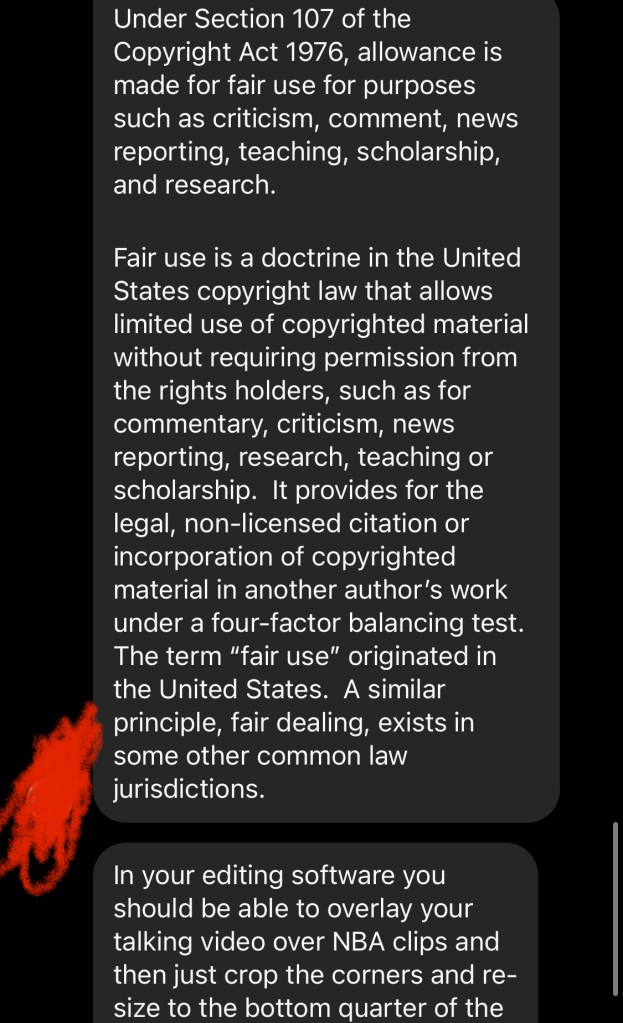
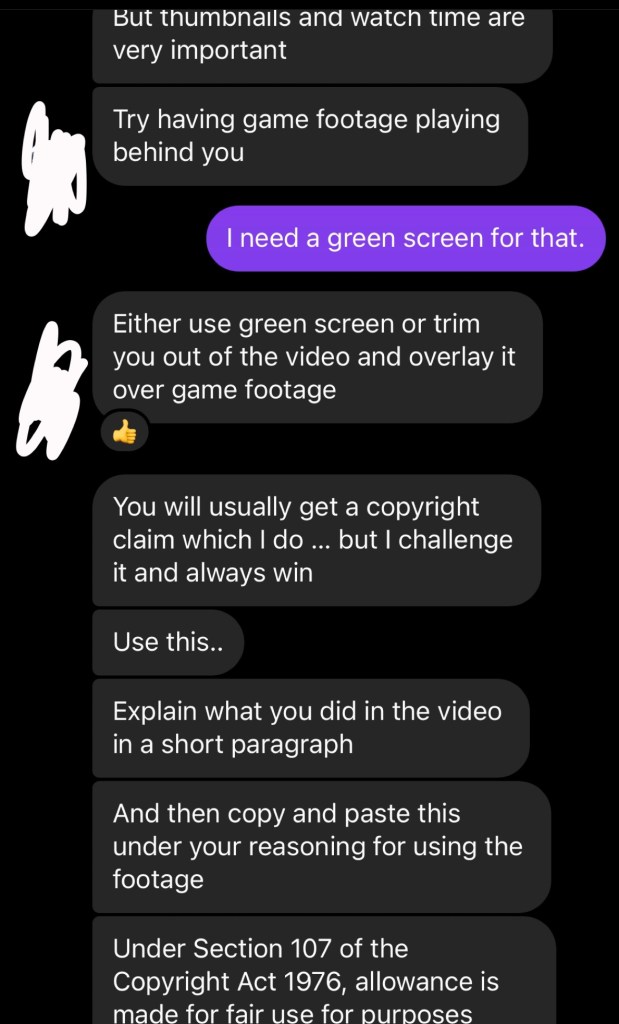
The main learning curve from Mavro Productions is that the old content and sit-down videos should be iterated in a way that makes these videos more interesting, once again, bringing back the attention economy. People lose attention to someone just talking, so therefore, adding more life to a basic video will make people stay on the video.

However, people still like the basic content as this has led to a growth in subscribers and the 660-subscriber mark remains constant as more people want to see the old content regardless of if it changes. So, another learning curve is that even old content can remain if the content is changing. 

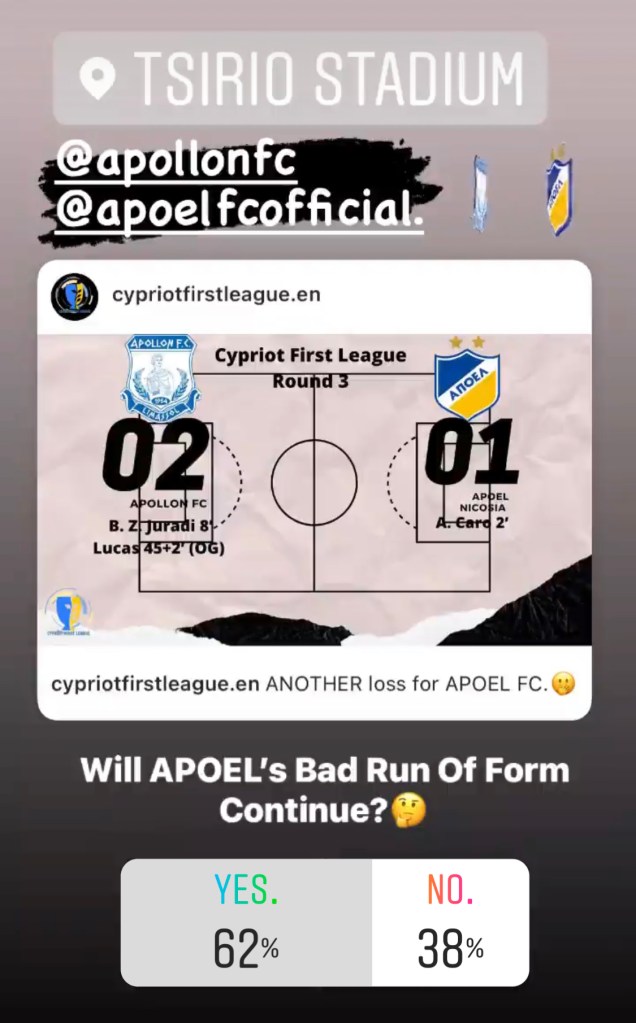
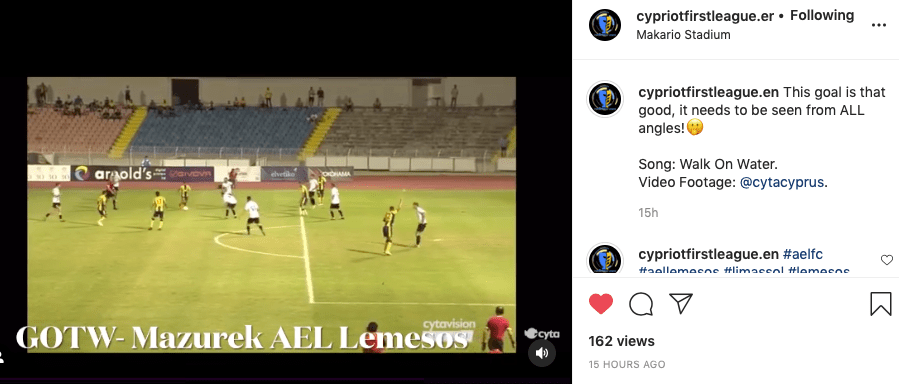
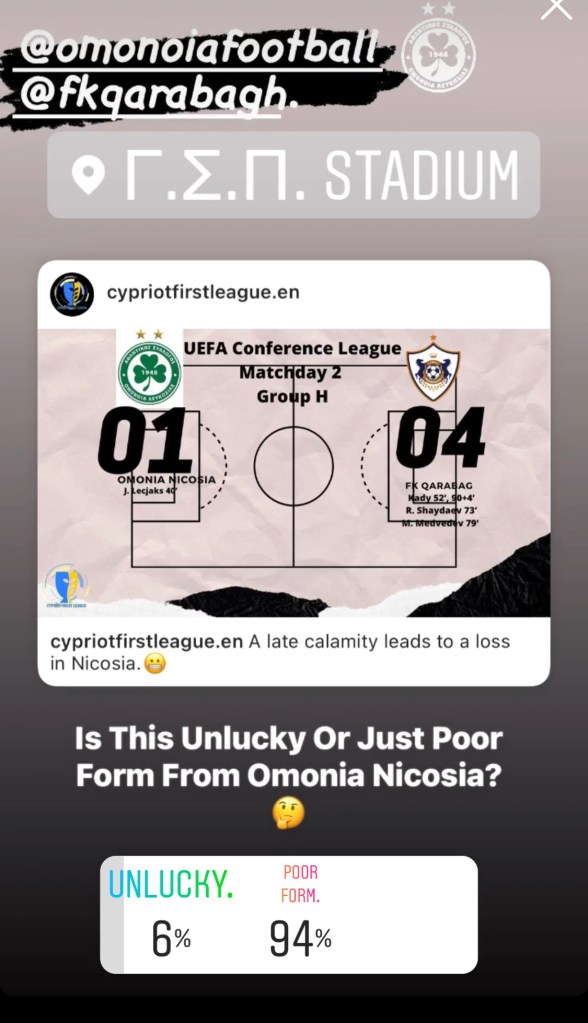
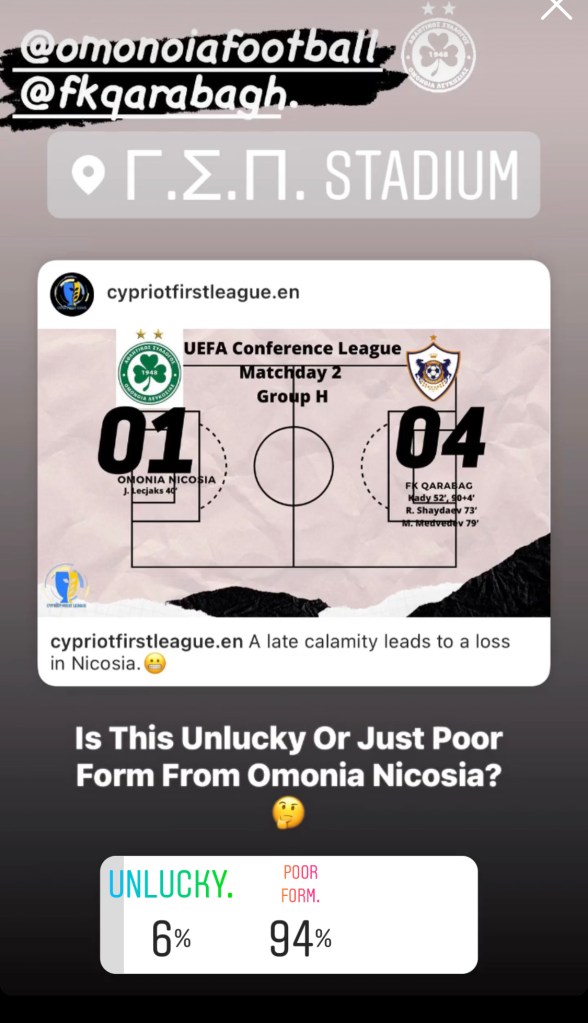
The Cypriot League page has a scarcely different type of content being created. Polls, goals, and scores are shown to add constant feedback loops and free-flowing information flows. The local to global system of communication becomes key, as people from Cyprus, United Kingdom and Australia interact with the page and opens more curation of the page. 
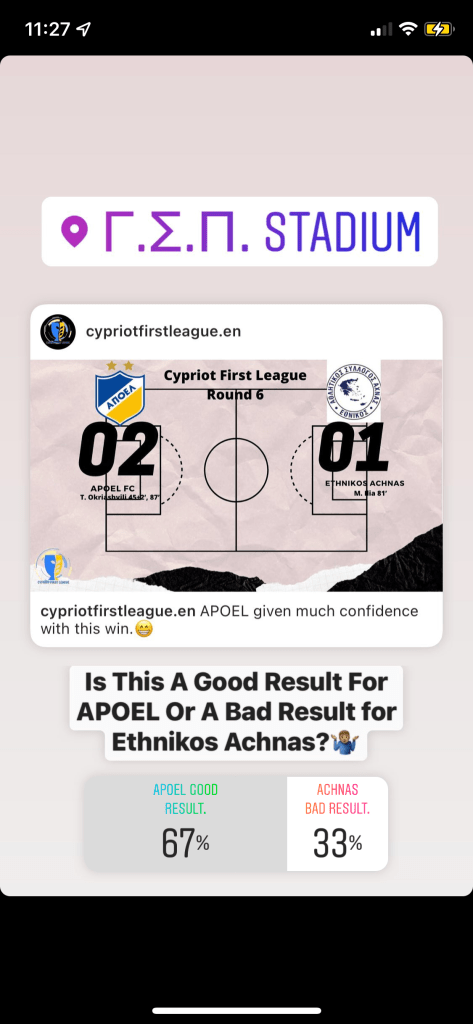
Something which is important is the followers to following ratio. My page only followers teams and professionals and shows that more legitimacy to the page, creating a more authentic look to the page.

According to stats from the Instagram page, of those who answered the poll, 60% of people who see the page are from Cyprus, while 40% are not from Cyprus. This shows that the problem of the league not getting recognition is growing as the market grows from national to an international stage. 

According to T. Mitew and Travis Wall a swarm network has been created, not only is there a distributed network, there is also a centralised and decentralised network where all these nodes are in corroboration with the page.

What has grown within this page is a shared basic reality of loving Cypriot football which has been encapsulated in the page that has been created. This love is enhanced through the videos created, showing some of the best that the league has to offer in order to enhance its identity on a larger scale. 

The main thing that was knowledgeable within the Cypriot League page is that constant uploading of content does not mean constant interaction, but having good content constantly leads to good interaction. Yes, the pages may not get any likes, but the stories are a great way of interaction, and these polls continue to grow and develop. 
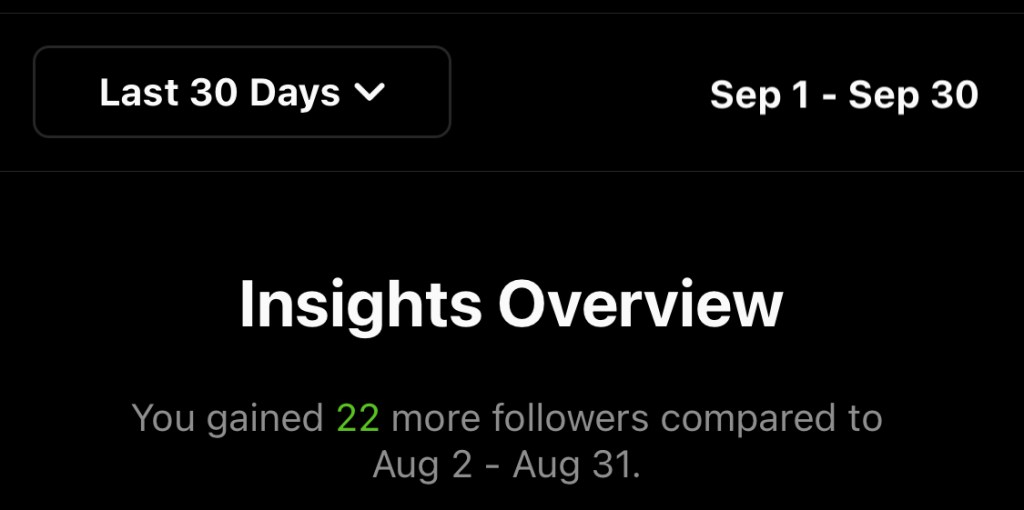
As mentioned in the Beta, constant iteration has allowed for an expediential jump in followers, which means that more news can be uploaded. As the followers have increased, a new section has now emerged as reviews have become a part of the channel.

The recent video has 800 views and what was learnt, based off the attention economy is that background music, focus on the shoes and flashy titles may allow for more interaction. Although focus is on the website, the other social medias help with the growth of the website. 

Within this sporting magazine, not much feedback loops have been seen; however, constant ideation continues to be done on the website. 

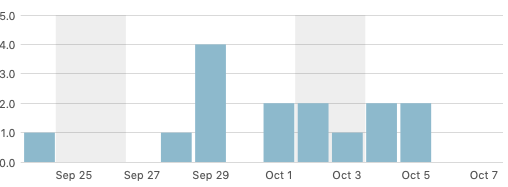
As seen in the picture below, views remain constant, which means that the audience still stays regardless of constant content being curated. As mentioned in the Beta, with the change in viewership, content has been created just minutes before the news has been announced to put a mark on the issue of small media markets not being quick enough to release news. 

Ultimately, the DA will continue to grow and improve outside of this assessment through constant iteration and feedback loops. The YouTube channel will continue to focus on curating old and new content to engage with new and old audiences. The Cypriot League Instagram will create more polls, add more goals of the week and include more scores to make the local to global component grow. With this, the hopes of more recognition for the league will hopefully grow as well. Talking Sports will continue to deliver news, sporting content and reviews on the page as it grows dramatically as a key media production news organisation. This DA will hopefully become more monetised as more content is curated.

433, 2021, viewed 26th October 2021, https://www.433football.com

J, Hall, 2018, What is the problem with social media?, Deep Code, viewed 26th October 2021, https://medium.com/deep-code/what-is-the-problem-with-social-media-5ec873f7a738

L, Kane, 2019, The Attention Economy, Nielsen Norman Group, viewed 26th October 2021, https://www.nngroup.com/articles/attention-economy/

T, Mitew, T, Wall, Swarm networks and the design process of a distributed meme warfare campaign, First Monday, viewed 26th October 2021, https://firstmonday.org/ojs/index.php/fm/article/view/8290/7202.

The Last Leg

This is it. The last leg, after a long trip to Burkina Faso, we arrive with our heads up and ready to grab that coveted DA Trophy. The shin pads are on, the fans are ready, and the boots are clean. 

Now, what is the media niche? The media niche is sports media production around the world. Gaining much inspiration from websites just like 433, ESPN and Bleacher Report who all excel within this media niche. The DA is the YouTube channel, Instagram, and the website, named Mavro Productions, Cypriot First League English, and Talking Sports respectively. 

Along the way to France, I stumbled upon many academics, and went through intensive training to be fully ready for the final. A. Caliando, who I saw while chilling in Dubai Airport approached me and told me all about interaction, and what it is like ethnographically researching. This helped in the investigation into the media niche, as I not only explored one social media but various social media to distinguish interaction between the two. Then, sipping on an apple juice in Nissi Beach in Cyprus C. Gertz using his research experience helped me the investigation of this media niche. With this, I developed a field site based on the works of Gertz. This field site assisted in consuming data and content. It was observed that content is uploaded on a day-to-day basis, however, what was learned along the way is that consistently good content is better than consistently mediocre content that is frequent. 

The autoethnographic research was the main part of the training for this final DA Trophy in Burkina Faso. This made me reflect as an audience, as I become a massive part of the creation community within the field site. A key reflection was that although sports media publications aim to share sports, they also look to be monetised and commercialised as seen with the extensive amount of merchandise these channels have. A simple football YouTube channel sells merchandise, and this channel is such a simple context. Simplicity sells. Vlog channels EXPLODE on the Internet due to its simple nature of it. This focuses on decentralisation. The Internet may be free, but it comes at the expense of attention. What is being sold is attention, which extends to merchandise, sales, and commodities. This media niche is so broad and open that the reflection is an ongoing process. However, the main reflection point, which was observed in the Moldovan mountains was that simplicity is key. Being an audience member, it is the simple videos that sell, intrigue, and interact. This is seen within the YouTube channel Mavro Productions, not only do the vlog type videos do well but they are frequent because they are simple.

Looking at a particular YouTube thumbnail while sitting in a condo in Poland, the ethnography research was a comparison as an audience member of sports media productions that I watch. ESPN posted a video, with an eye-catching thumbnail over a Mavro Productions video of the same sport. This made me reflect on what video would I want to watch? Does the niche cater to those who work hard or for those who work smart? 

The online presence which was observed can be broken down into the 3 main media types that were being produced, and how these medias helped with the online public persona. 

Mavro Productions. Telling people, the channel name in Cyprus and Greece gave people a giggle. This helped with the public persona which was aiming to be seen. An expertise which was developed was the name. What is in a name? A simple eye-catching name grabs attention, whether this is a channel, video, or post. However, what has been developed is that thumbnails must be eye catching and not simple, this makes people click on videos according to P. Harrigan. The online presence of Mavro Productions stems to Instagram, Facebook, and YouTube and is seen in Australia, the USA, Greece, Cyprus, and the Philippines. All a channel and a media niche is one video to set the foundations for other videos which in turn, leads to the growth of the online persona that is going to be portrayed. 

B. Robards stated that polls drive advocacy and communication strategies. This was key in the Cypriot First League English page. The public persona of myself in the Cypriot League page extends to further than Cyprus with a location tag, polls, and the post. This online presence therefore grows and expands as a local to global context of the media niche is in practise on the page. The communication strategy is that people get to simply vote and state their opinion on a public forum. This drives advocacy as more people will see the content. The expertise of a simple, yet monetised based content continued to develop as the online presence and public persona is also created. 

Talking Sports developed its online presence as the public persona spread to more social media accounts, in particular Instagram. As articles were written and uploaded minutes after and before the news became breaking, this would make the public persona grow as more people want to engage with a small-scale sports media production niche. A massive growth in Instagram followers became apparent. This developed the expertise as it became obvious that consistency is key. There still needs to be frequent content for a page to stay relevant. 

 Conclusively, this DA will continue to develop and expand as the media niche is expanding and growing as social media continues to have an extensive mark on the world. The autoethnographic research as well as the corroboration with the academic resources has made the interaction as an audience as a reflective process. The research and content produced will help me win the DA Trophy as I extend my research skills into better and more authentic content. Mavro Productions, Cypriot First League English and Talking Sports will continue to create content in order to heighten the online presence and public persona that they already possess. 

Bibliography

433, 2021, viewed 22nd October 2021, https://www.433football.com

A. Caliando (2017) Digital Methods for Ethnography: Analytical Concepts for Ethnographers Exploring Social Media Environments.

Bleacher Report 2021, viewed 22nd October 2021, https://bleacherreport.com

ESPN, 2021, viewed 22nd October 2021, https://www.espn.com.au

Gertz, C 1973, Thick description- Toward an interpretive theory of culture, Basic Books, New York.

J, Weismueller, P, Harrigan, 2021, Organic Reach on YouTube: What Makes People Click on Videos from Social Media Influencers?, SpringerLink.

Moller, K, Robards, B, Walking Through, Going Along and Scrolling Back, Nordicom Review, Sciendo.

The Internet of Things

The Internet of Things is a term which alludes to the physical objects connecting within the technological universe. The Internet of Things is a global phenomenon and can be used for any sort of thing that has been created from water bottles to tissue boxes. Discussing the past, present, and future implications of the Internet of Things, will help indicate to the importance of this sensation and how it will continue to be crucial not just in life but the technological realm of data and information.

The Internet of Things was invented in 1999 by Kevin Ashton. Ashton wanted to attract people with new technology, and so, the term ‘Internet of Things’ was born. This history was to discuss whether to add things to the Internet or make the world more suitable to things. The history and the present combine as every object have a digital history which makes for logistics to be far more precise. 

In a modern context, the Internet of Things started to gain popularity in the 2010’s. An explosion of data makes this happen, as local clouds of storage become popular, data becomes the only type of being to exist. Humans have become commodities, and therefore, means that their currency is data. T. Mitew indicates that the human body and everyday materiality are seen as data. The RFID Journal puts this common spin on the Internet of Things in an intriguing way, by stating that the economy and society are not based on ideas and information but on things. 

The term ‘things’ is loosely thrown around within the Internet of Things. This toothbrush may be simple, but once this toothbrush is connected to the Internet they are actively participating in social exchange and rearranging patterns in the modern world. This is in accordance with J. Bleecker. Each object gets a unique address for this thing to be easily identifiable. All this, from a simple photo of a toothbrush. This transition of objects to social things appears as data within a computer. Therefore, showing how data is an intrinsic and integral part of the Internet of Things.

These things can also have a semantic interface for humans. Whether these are cars, phones, or a tablet. These things become a whole universe of data catered for the humans to use on a day-to-day basis. Humans may control the interface, however, the Internet of Things is continually grabbing data and turning these ‘things’ into material. T. Mitew elaborates that these devices stores and processes information locally on a cloud. This example can be seen within Apple products. A cloud is a whole information of things stored in one place which comes up as an interface for humans, in Apple’s case through the iCloud system. Then, from this cloud system context data becomes the object as a photo, video or thought can give the human a reason to access this cloud. 

The Internet of Things leads to a shift in the role between physical objects and humans. What was once a key dominance of humans over objects has now shifted as objects have more power over humans. This is seen through the key dynamics of data that objects take, a simple calendar can now become digital and absorb all the data that the human embeds. Instead of humans using objects, objects use humans to redefine and reshape the power dynamic as well as consume the data that the human has leaked from the Internet of Things. Ultimately, this shows the power of the Internet and how simple objects act as the main front runner of data collection. 

Future implications of the Internet of Things are that human-to-human interface will become thing to thing interface in a movement called M2M. Every object will have a way to connect, whether this is connected on the Internet or not. Not only will this challenge the way in which people live, as the Internet of Things consumes more data, but it will change the way in which the world operates.  

Technology will become so absorbed in our life, that is currently is, that in the future it will no longer be seen what even technology is or not. As commodities and objects become tangible objects, the actual presence of things will disappear as a world will continue to shift to online parameters. M. Weiser predicted this in the late 1980s, that technology will be a part of the background life, however this has become apparent with a huge twist. Now, objects become the background of life as the Internet of Things absorbs objects and makes it its own. Objects will become online footprints and continue to absorb data. Credit cards, vouchers and money are all online pieces of data that were 20 years ago, all on paper. The future will make all these types of objects become stronger and more influential as connected objects will become tangible. This will remove all previous facets of paper and handheld objects and turn everything into one place as the ‘data being’ that is being created continues to grow and elevate. 

Conclusively, the Internet of Things came into play in 1999 as a term to attract new technology. This term has grown and developed into an eruption of data in which, objects and data corroborate to create control of humans through the Internet. The Internet of Things has a semantic value for humans through clouds and context. The Internet of Things continue to show a different power dynamic between objects and humans. All these key features will be fundamental for the future implications of the Internet of Things. Interface will change and technology will become absorbed into life that all tangible objects will move to a technology-based system. The Future Networks and corroboration with the Internet of Things is a key phenomenon which will continue to be present in the future as well as in the present as data continues to expand and the foundations of the Internet continue to be built based on technological advancements.

1003 WORDS.

Bibliography

Bleecker, J, 1993,Why Things Matter: A Manifesto For Object Networks.

Dua, N, White iPhone XR, Pexels, viewed 20th October 2021, pexels.com/photo/white-iphone-xr-3586249/.

Grabowska, K, Photo of Toothpaste on Toothbrush, Pexels, viewed 20th October 2021, pexels.com/photo/photo-of-toothpaste-on-toothbrush-4202927/

K, Ashton, 2010, That ‘Internet of Things’ Thing, RFID Journal.

K, L, Lueth, IOT Analytics, 2014, Why it is called Internet of Things: Definition, history, disambiguation, viewed 20th October 2021, https://iot-analytics.com/internet-of-things-definition/

Mitew, T, 2014, Do objects dream of an Internet of things?, The Fibreculture Journal, viewed on 20th October 2021, https://twentythree.fibreculturejournal.org/fcj-168-do-objects-dream-of-an-internet-of-things/

Mitew, T, video recording, 2020, The internet of things: from networked objects to anticipatory spaces.

Tan, L, Wang, N, 2010, Future internet: The Internet of Things, IEEE.

Beta On This

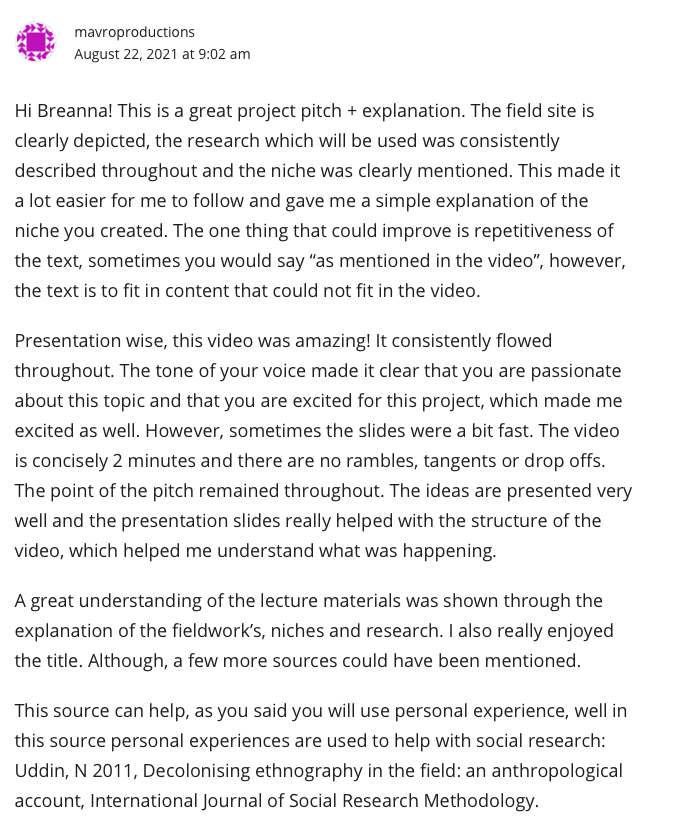
Commenting on fellow peers’ blogs really helped with how the DA was going for me. Seeing that others are not as concise or have any direction as opposed to mine which has a full stream of direction made the assurance that my DA was on the right track.

The contribution has helped myself grow with the DA, see that more research leads to a better DA and has helped the student grasp a better understanding of their project later on down the track.

What was learnt was that media ethnographies and media niches are not one dimensional. There is a vast variety of sub categories within these topics and these can be easily explored and examined through the further research which has been studied. Another learning moment was that different people have different research methods and that although a video may not be aesthetic it can still deliver and prices all the content needed within the DA.

These methods and talking points will continue to be used in my DA as I develop it from a hobby to something of monetary value through the consistent research, content creating and niche engagement.

Upon much reflection and deliberation within my DA and the comments, it has been quite imperative that the way I which the DA is going is the way to continue going forward. Further creation of content within the Instagram, YouTube channel and the website will help the DA and provide for further feedbacks while furthering the media niche.

Providing feedback has not only helped shaped other DA’s but can also have the feedback needed within the DA for me, opening and creating more feedback loops.

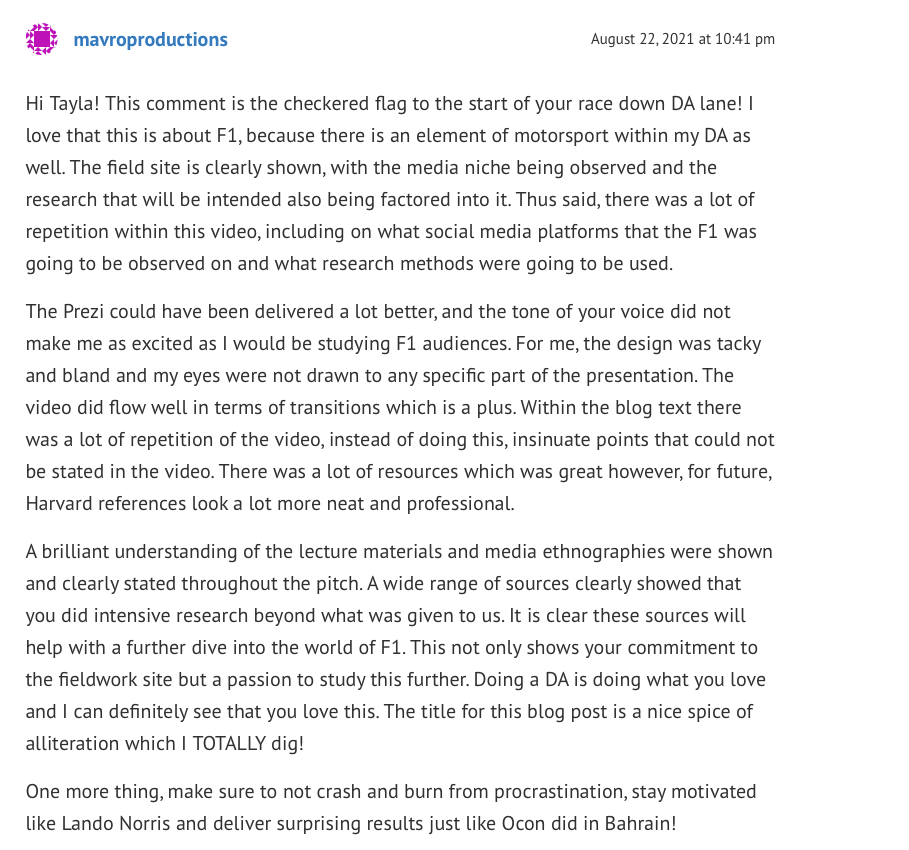
As a content creator for F1 like this DA, it is imperative to compare and contrast to see what works with that DA and what does not work in order to further content creation.

The Alpha Beta

The Digital Artefact which will be constantly ideated and curated is one which has been a work in progress for many years. The content consists of an Instagram page, a YouTube channel and a website.

Cypriot First League English

Upon addressing the issue of the league not being recognisable, an Instagram was created in order to ideate content for the page. On top of this, to establish a constant feedback loop within the page and show the free flowing information present throughout. These feedback loops were present through Instagram polls. After posting and ideating the score, the location of the game, the teams and the post would be put on a story as well as a question for viewers to answer. This leads to actors of the page being unparalleled opening a global interaction of curation on the page.

Polls on the Instagram page.

Upon doing these stories, I saw a jump in not only followers but audience engagement. Therefore showing that this ideation was the influential way for growth. This way, there was constant feedback loops present throughout. I saw that this type of engagement was key and helped made the content better, so, I decided to iterate my content in this way in order to continue constant feedback loops.

With this page the Goals of the Week have continued and the views show that this type of iteration is still influential for the followers of the page.

Mavro Productions

This media iteration focused on breaking the long tail and paving the way for a small sports media company to be noticed. This was done through iteration of content and broadening the scopes of sports. However, the latest video has not amassed the views, it has however, opened up a dynamic of a feedback loop.

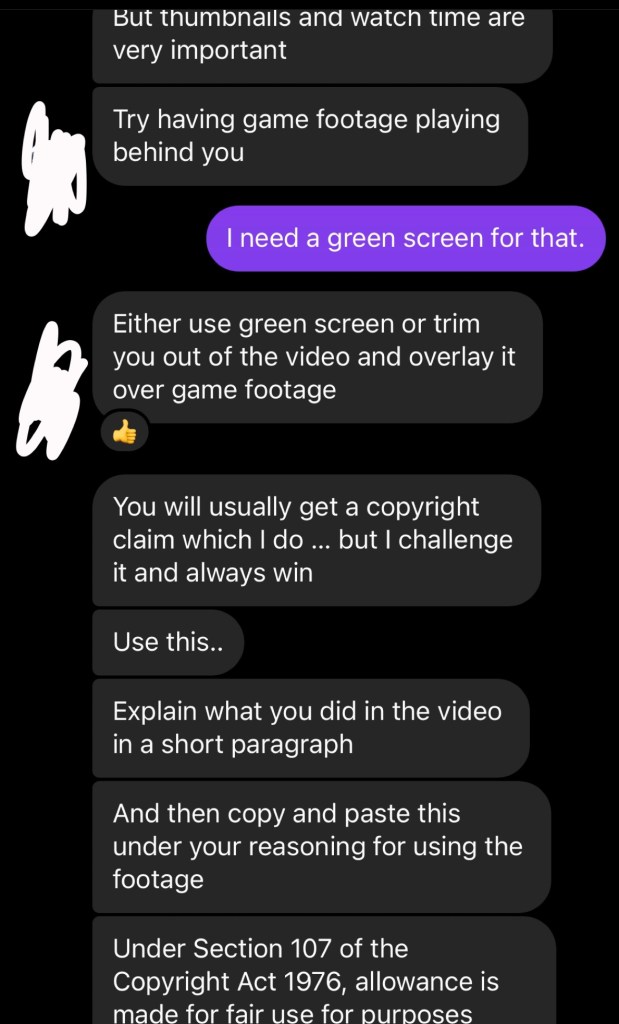
Feedback which was given was based upon thumbnails. Another small media production company give feedback on thumbnails and therefore, has helped with the future iteration of this channel. This feedback will help drastically as it provides advice for the future direction of the channel and the career path which wants to be possessed.

Talking Sport

The final piece of the DA puzzle is the TS website. Constant iteration has had a massive leap in followers, with that in mind, the jump has helped with further curation and ideation of content as the news is delivered much quicker than it used to be. For example, posting and creating a story about a new signing minutes after it has been announced or even before.

TS Instagram growth.

A three step process of writing the article, then sharing it on Facebook with a short description and picture on Instagram has helped with the overall growth of the website.

This project will continue to be worked upon, adding more feedback loops through polls, encouraging audience engagement with thumbnails and writing on time articles to attract even more followers to the sporting website.

Bibliography

J, Weismueller, P, Harrigan, 2021, Organic Reach on YouTube: What Makes People Click on Videos from Social Media Influencers?, SpringerLink.

R, L, F, Coelho, D, Santos de Oliveira, M, I, S, de Almeida, 2016, Does social media matter for post typology? Impact of post content on Facebook and Instagram metrics, Emerald Insight.

Beta This

The Project Beta continued to emphasise my media niche of sports media productions and how my online persona within the YouTube, Instagram and website was heightened due to audience feedback, interaction and connection.

Through taking the audience feedback on board I was able to synthesise and add further knowledge of my niche and continue to develop my persona. This was done through polls, videos and breaking news. These effects had extraordinary results for the DA as followers grew on both Talking Sports’ Instagram and the Cypriot First League English Instagram.

What will continue to be developed based on various feedback loops is the type of thumbnails that will be used for the YouTube videos in order to attract more audiences within the media niche.

The timeline which was followed throughout the project, allowed for consistent flows of research and content creating to be simultaneously curated and works under one umbrella. This allowed for me to further engage in my persona as a professional, using a scope as a fan, and continue to research the media production media niche in one sitting.

Sources

ESPN, 2021, Stephen A. says Joel Embiid can’t miss games anymore | Stephen A’s World, online video, October 2, 2021, viewed October 2, 2021, https://www.youtube.com/watch?v=VIAm1tn9Ar4.

J, Weismueller, P, Harrigan, 2021, Organic Reach on YouTube: What Makes People Click on Videos from Social Media Influencers?, SpringerLink.

R, L, F, Coelho, D, Santos de Oliveira, M, I, S, de Almeida, 2016, Does social media matter for post typology? Impact of post content on Facebook and Instagram metrics, Emerald Insight.

Pass the Poll

Different setting this time.

These epiphanies will be applied to my online persona of sports media production companies as I further see how audiences engage with social media and how this is part of a de-centralised network of communication. This will help my DA as I further add communication modes to engage with audiences. 

Decentralisation refers to the beauty of the Internet and how it is free in unprecedented ways (M. Agarwal), which includes the field studies as indicated previously.

This video explains new epiphanies as well as old epiphanies which were found. The above text could not fit within the video time frame but has been spoken about in the above text.

Sources:

Agarwal, M, 2021, Freedom, decentralisation and the regulation of content on social media.

Moller, K, Robards, B, Walking Through, Going Along and Scrolling Back, Nordicom Review, Sciendo.

Rossini, P, Hemsley, J, Tanupabrungson, S,2o18, Social Media, Opinion Polls and the Use of Persuasive Messages During the 2016 US Election Primaries, SAGE Journals.

Smith, T,M, 2018, “Consumer Perceptions of a Brand’s Social Media Marketing”, University of Tennessee, Knoxville.

Global Information Flows

In this analysis the concept of global information flows will be examined and observed and how this idea has a massive contribution to the past, present, and future networks of media. 

Looking at global information flows it is imperative to discuss how the Internet started as this is the root cause of global information flows. In accordance with Cerf, V and R. Kahn the history of the Internet first started in 1962 with J.C.R Licklider predicted that a global interconnection of computers would become a common trend around the world. The Internet back then was a system of networking and still is to this day, showing that even the Internet back in the 1960s had the same visions as the modern-day Internet. Constant information flows are a key idea for the Internet. This is also explained by F. Stalder. Someone can create versions of the same material which can be rebranded and recreated around the world in a concept of exchanging. This not only explains the history of the Internet but also discusses the current flow of global information and communication within a paradigm of media consumption.

An explosion of communication is highly relevant with global information. As messages are communicated, they become increasingly spread and this has become a recent development within the Internet. What is local information could become global in a matter of minutes based off the patterns of flowage and is a key trend within today’s information flows. This explosion of communication development can be linked with the concept of ‘always on’ by M.Gregg. Whether we are not physically online, information is flowing around the world, either about individuals or corporations which are used to engage with networks once they are being used by a person. This global information flow industrialises material transmission and how it is processed. Ultimately, the way users engage and use the Internet and media through this ‘always on’ idea becomes an industry as corporations use the flow of information as a means of commercialisation. For instance, a simple message to a local friend about a concert overseas becomes a key part of that person’s information flow in their digital and online footprint, this then explains the concept of global information flows. The global information flow is crucial for messages to flow and become processed from one online mode to another, whether this is from a laptop to a tablet to a phone.

A current Internet development is social media and how these platforms cause a global information flow. The main social media’s, seen from the acronym coined by T. Mitew as FAANG, Facebook, Amazon, Apple, Netflix, and Google are all key players within these flows. R. Reeve explains that the more global a brand comes, the more it changes its business model. This idea is also intertwined with global flows of information. Our social lives are hand in hand with technology, another key point from R. Reeve. A key example of a global flow is Facebook. Facebook has changed its functions from simply just a social media site to a place to sell items and organise events. The global flow from a simple like has led to the overall enhancement of a current Internet development of social media to become a vast part of people’s lives without them even realising, through new communication nodes and flows. Therefore, as social media develops as a social media it continues to grow and shape global information flows. The more that flow, the more changes and features social media websites add which is in conjunction with global information flows.

Another key feature global information flows are that they require low network transaction costs. This explains how the more modes that are connected, the more it scales as a transaction cost. Knowledge continues to be a main force of production. What global information flows know about users in turn shapes the way that these flows interact and coordinate content to their users. T. Mitew explains that the larger and more centralised a network the higher its transaction costs. Therefore, a global information flow does not consist of one mode, but of numerous modes of intertwined webs of connectivity. This includes the likes of Amazon and Ebay, as they have one distinct product. Connectivity. Ultimately, a present feature also includes the low network transaction costs that global information flows possess. They not only work together but link together through the knowledge of production and data to create global information flows.

A future implication of global information flows is the emphasis on ‘attention’. Attention is a current paradigm and according to L. Kane is a whole new ‘economy’ within an Internet realm. M. H. Goldhaber wrote that the global interaction flows are shifting from a material-based economy to one based on the capacity of attention. K. Kelly indicates that this new economy is based on intangible things. As attention is so intangible, so do ideas, information, and relationships as they all become interlinked. For global information to flow, it must be attentive to a wider audience and spread in a free-flowing way. Although information is easily accessible and has no value, it wants to have a value. This value will all have to do with the attention of an audience as a future implication of global information flows. All in all, attention is a current implication and a future one in terms of the global flow of information. Attention has become an economy and ultimately shapes how information is transferrable from a local audience to a global audience.

Conclusively, global information flows have stemmed from the early stages of the Internet to the present tense of social media and low transaction costs. These have key features of an explosion of communication and attention. These key features will be integral to the future directions of global information flows and how they remain constant and consistent throughout the growth of the Internet. Global information flows are a key technique and practise within future networks which will continue to be present in the future as well as in the present.

WORD COUNT: 1009 WORDS.

Bibliography

Bradwell, P, Reeves, R, 2008, Network citizens power and responsibility at work, DEMOS.

Gregg, M, Function Creep: Communication technologies and anticipatory labour in the information workplace.

Kane, L, 2019, The Attention Economy. 

Kelly, K, 1999, New Rules for the New Economy

Mitew, T, video recording, 2020, The chronic task of sorting: information flows and liquid labour.

Mitew, T, video recording, 2020, Feudalism 2.0: living in the information stack.

Leiner B,M, Vinton G,C, Clark, D,D, Kahn, R,E, Kleinrock, L, Lynch, D,C, Postel, J, Roberts, L,G, Wolff, S, Brief History of the Internet, 1997.

Stalder, F, 2005, Open Cultures and the Nature of Networks, New Media Center. 

ReUnited

Sources:

A. Caliando (2017) Digital Methods for Ethnography: Analytical Concepts for Ethnographers Exploring Social Media Environments.

Pink, Sarah, Horst, Heather, Postill, John, Hjorth, Larissa, Lewis, Tania, Tacchi, Jo (2016) Researching Experience, in Digital Ethnography: Principles and Practice. Sage: Los Angeles.

This video explores the 3 key epiphanies I have noticed so far in my research as well as linking it with my DA and persona. The video also shows many screenshots.

Frugal Feedbacks

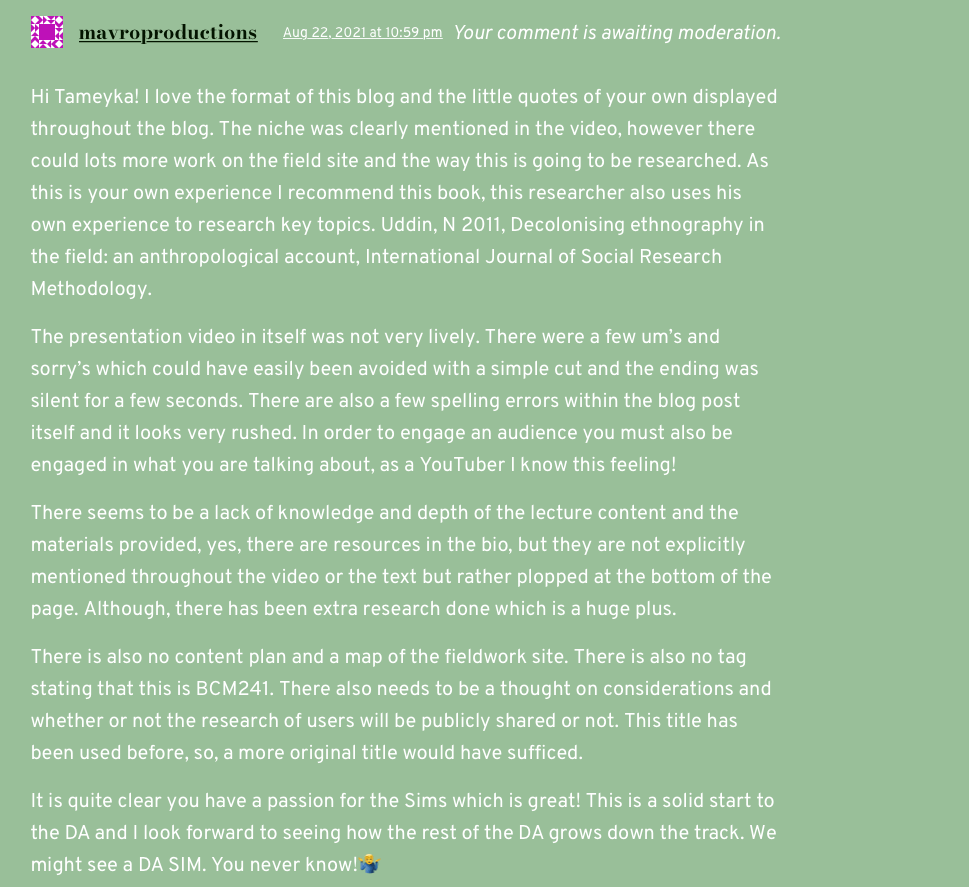
This is the final blog post for BCM241 explaining, evaluating and self-assessing the blog post that I wrote feedback for. I explained what went wrong, what I did well, how this will help shape my DA and what can be done for better feedback in the future.

SOURCES USED SO FAR!

https://gravyanalytics.com/blog/products/sports-fanatics-audience-profile/

https://www.statista.com/statistics/1100571/sports-content-social-media/

https://www.statista.com/statistics/1104686/sports-fans-age-distribution/

Geertz, Clifford (1973) ‘Thick description- Toward an interpretive theory of culture,’ in The Interpretation of Cultures, Basic Books New York.

 https://hoop-social.com/nba-team-market-size-rankings/

Blog Posts

https://tameykaarellano898917841.wordpress.com/2021/08/16/bcm-da-pitch-part-one/

https://thracing48.wordpress.com

https://laurenmonnier.wordpress.com/2021/08/20/conspiracy-theorist-unite/