Here we go! It is time to review the car that has blew up the electric cars business. Tesla. Although dubbed to be better than petrol cars for the environment, is it really?
You look at a Tesla, and most people say wow! It’s slick design, roll up doors, and the mini TV on the inside. All this is a plea for Tesla to catch the attention of the consumer, to overshadow the fact that Tesla’s are actually bad for the environment.
Although Tesla cars do not use gas, it still needs carbon to contribute to the charging of the car. This is extremely bad for the environment, on top of this, the lithium they produce from the ground is also detrimental to the environment.
On top of that, Tesla cars are super expensive. To buy and to recharge. The cheapest Tesla on sale right now from CarSales is $100,000. That kind of money is not for the average Australian considering the average Australian makes around $60,000 a year on top of houses, taxes, and other expenses. So, although the Tesla has been made for luxury and for the environment, in order for decarbonisation to be in full effect these should be affordable. So, not only are Tesla’s not good for the environment they are also super expensive.
Stay tuned for further blog posts about other electric cars.
As we cover the depths of decarbonisation it is imperative to get a grasp of what electric cars, and which brands have electric cars.
So, what is an electric car?
I mean, this is pretty self explanatory. An electric car is a car that is using electronic components to power it up instead of petrol or gas in order to ‘preserve’ the environment.
But when did this concept of electric cars even start? It is hard to believe, but the first electric car was made in the 1800’s, well before the likes of Tesla and Hyundai burst onto the scene of automation.
Below is a list of all brands’ most well known and popular electric/hybrid models, and the cars we will be reviewing over the past few weeks:
Tesla
Roadster Sports Car (2008) – Model S (2012), Model X (2015)
Model X, CarAdvice.
Hyundai
KONA Electric 2023
KONA Electric, Move Electric.
Porsche
Taycan
Taycan, CarsGuide.
Toyota
Prius & Camry (Hybrid)
Prius, CarAdvice.
Kia
EV6
EV6, CarAdvice.
It is clear many brands are venturing out to the electric car model. The cars listed above will all be reviewed as to whether they are actually ‘environmentally friendly’, so stay tuned! An introductory blog like this is key to understand how many electric cars there in general.
Live tweeting is a new phenomenon for me, and having to watch movies while also interacting with people on Twitter was something that has become a custom to me.
During each screening, my contribution would be the same, very active on Twitter, sometimes, this would be to counteract the movie as I was not enjoying it.
As seen from the video, the views and retweet numbers relatively high considering the # is going off during the screening process.
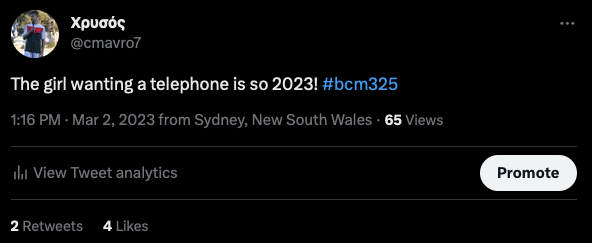
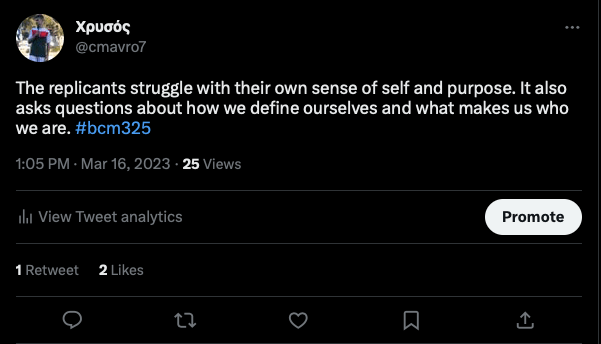
The main point that was being established is this notion of ‘the future is now’ seen in lecture recordings. Watching these films from 30 years ago talking about now, could help me engage with what our world looks like now and whether these predictions were right. This can be seen in my blog posts, and some in which I retweeted:
The film that struck the most to me, was the Blade Runner. Especially when it comes to their replicants and their interpretations on the world. The replicants themselves corroborate the idea of cybernetics through the control and communication of the replicants and Sci-Fi. G. Bruno indicates that if a machine can feel emotions and talk like them, that is the main sign of a human in Sci-Fi. A key emotion within the world is how us humans identify and belong within an environment, which was something that I thought is crucial for the replicants within the movie. That feeling is something even seen by humans, and so it rang the question, is AI becoming more and more human and are humans becoming less human? This idea was discussed immensely within the live tweeting session, especially the correlation of cybernetics.
The main thing that is being seen within every movie is the concept of our actions having positive and negative consequences. This in turn, affects the future network of technology how it will be interpreted in the future. This book written by C, Heath and P, Luff perfectly explains how technology has shaped today’s world, putting it as, the reorganisation of society. This is nothing but true and had has been within all the movies watched, as society is reorganised and structured around technology and artificial intelligence. The tweeting process made me think, does technology really have a positive effect on the world? Is it making us more environmentally unaware? Even AI itself in ChatGPT is questioning this.
A key contribution was also including quotes that I picked out from movies, and made me think what is actually trying to be said here? Especially in movies I did not enjoy like the Ghost in the Shell.
“Get off your ass and arrest those garbage men” said no cop ever.🚔👮🏽♀️ #bcm325
This above tweet made me think to myself as to what if technology has already made humans puppets? This has been a well thought idea, as Y,N, Harari indicates that our lives involves around fictional innovations.
There was lots of conversation on Twitter, in real time, which indicates that humans are indeed creative and talkative creatures with their own interpretations and depictions of different things. This shows the subject idea of think tanks, and how we rely on this communication through networking, as we network with fellow students through Twitter.
In this blog post, the comments which were left on pages will be discussed as well as the live tweeting which has occurred from week 1-5.
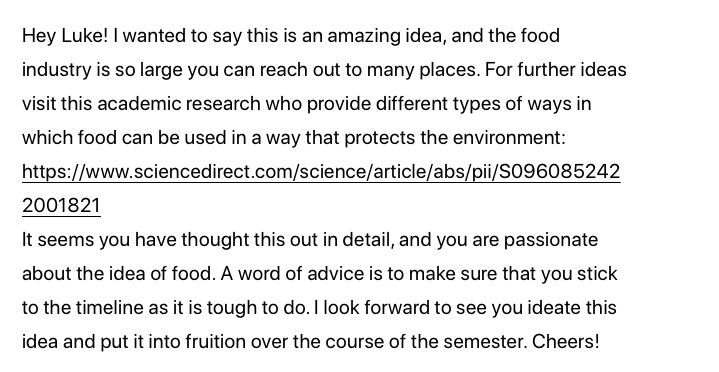
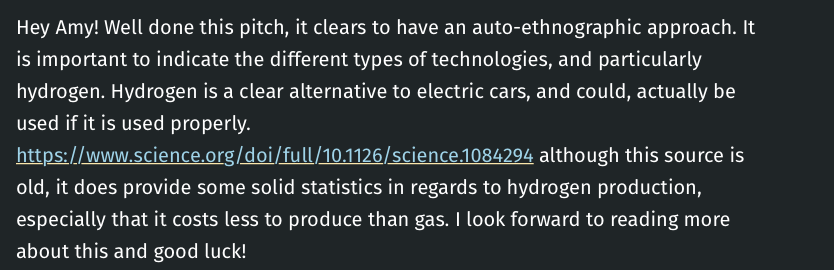
I commented on three posts, all about their own unique interpretations of the theme ‘decarbonisation’.
What really struck me was the blog post about hydrogen, as my DA will also mention hydrogen in the form of electric cars. The source I used enhanced my view on hydrogen which was embedded in the comment on the blog post. The other two blogs mentioned food and packaging and the way in which it can be sustainable. For the food source, it was important that he would reach out to other places, which I agreed with. In order to get the best result, you need to hear directly from the source. For the packaging DA I provided them with a similar business model so they understand there is demand and whether they can supply that demand.
Commenting on fellow peers’ blogs really helped with how other peers DA’s was going for me. Seeing that others are thinking of many great ideas for decarbonisation made me happy as there is direction for the environment.
The contribution has helped myself grow with the DA, to see that more research leads to a better DA and that this can help the student grasp a better understanding of their digital artefact while they work on it.
What was learnt was that decarbonisation is not one dimensional. There is a vast variety of sub categories within this topic and this can be easily explored and examined through the further research which has been studied. Another learning moment was that different people have different research methods and a key focus on auto-ethnography is something that students are doing in order to enhance their research. Auto-ethnography looks at personal experience to understand cultural experience. So, what was learnt is that in my DA auto ethnography is the best way to go as it explores the personal experience of electric cars and compares it to the cultural thoughts of it.
These methods and talking points will continue to be used in my DA as I develop it from a research project to a hobby through the consistent research and content creating.
Good engagement requires care, and providing tips and appraisal. This is something which was done within the comments I applied as I a 3 step plan for commenting:
Make sure you praise the work.
Back up your point with a source.
Advice that you will continue to follow their work.
Upon much reflection and deliberation the comments, it has been quite imperative that the way I which the DA is going is the way to continue going forward, as my ideas are corroborated with those of other class mates. Further creation of content within the blog post will help the DA and provide for further feedbacks while furthering the topic of decarbonisation.
A game is something that can be enjoyable and played by all ages regardless of what genre, type, and environment is required. Or to put it more academically, a game is following a base set of rules, and would not be present without these rules. (Cambridge University).
In class, we played lots of board games, exploring all different types of niche games. However, the two games that stuck out to me was Throw the Burrito and Sheriff of Nottingham.
Throw Throw Burrito
The game is as random as it sounds! The main theme of the game is burritos, as told by the title, and is better played in a setting that is outside or has lots of room. The main mechanic of the game is clearly the burrito and trying to get as many trios of cards as possible. Yes, I called it ‘Throw the Burrito’ in the video, whoops!
Games do really affect our behaviour, and as it took forever to understand the concept of the game, our behaviour shifted towards the game. The instructions were too convoluted and a visual presentation was the way in which the game concept was understood.
The idea of a soft burrito and being able to throw it at your mates made for a more enjoyable experience once the rules were fully grasped. The design and having those burritos standing in the middle of the table, staring at you intently really made you want to get those ‘burrito cards’ so that you could throw them at your friends. The idea was corroborated by the games mechanics to ultimately produce that feeling of angst of throwing those burritos.
Another emotion which was encountered during the game was anxiety, in a good way. Your brain has to pick up cards, making sure there is a certain amount of cards in your hand, as well as making sure you put down the trios, and ensuring you are ready in case there is a burrito battle. The game mechanics makes it work as a fast paced game, and one that is quick and easy to do, you can get 10 rounds in, in the same time it takes to finish ONE game of Monopoly.
This fast-paced feeling means that while playing I did not even feel bad that I lost, but would feel even better when I hit a burrito at someone, even though I would also feel bad at the same time.
The target audience is definitely for young adults. It can even be played after a late night and a few drinks, it does definitely feel like that would be the type of setting in which this game would be played. On top of that, the game is so niche, but it fits best under the category of a ‘party game’. Board Game Geeks sides with the genre being that of ‘party’ and even describes the game as ‘what happens when you cross a card game with dodgeball’. This description is definitely fitting once the game has started and everyone is in full swing ready to throw things at your friends.
Sheriff of Nottingham
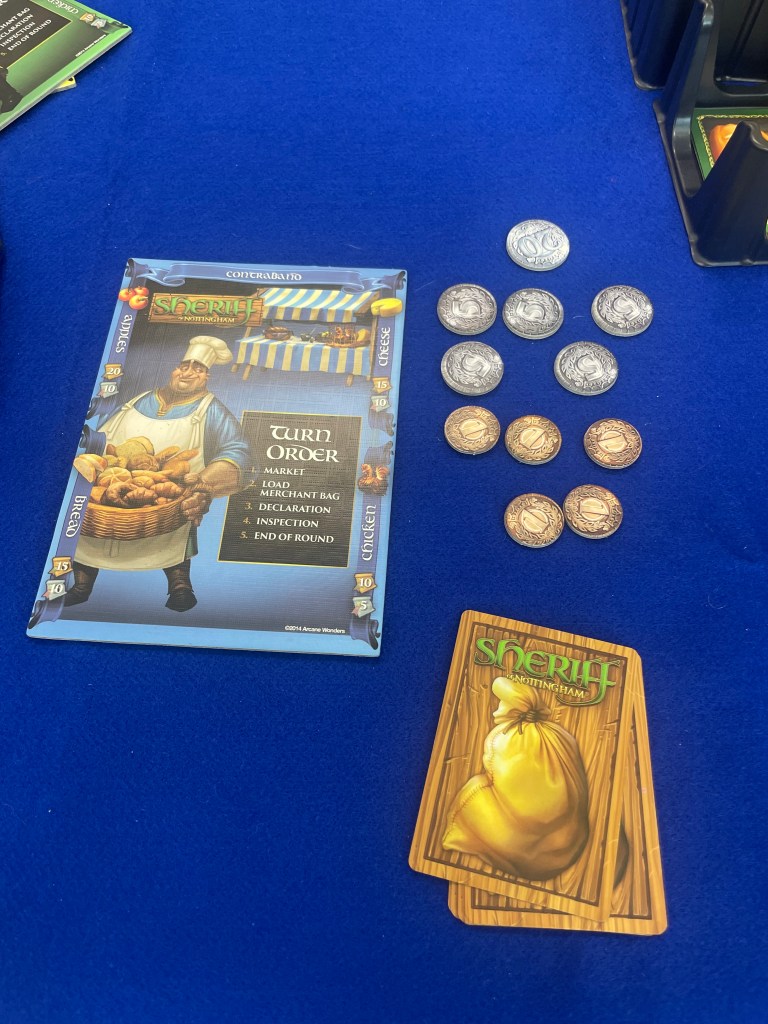
This is a game in which it affects our behaviour. The Sheriff of Nottingham’s main theme is to deceive your way into making the most money, and believing the lies or not when you are Sheriff. The main setting of the game can be indoors and the theme definitely falls under fantasy, with the key game mechanic being the main pieces and cards that are involved with the game.
This game does require time, and once understood the game was very quick and easy to play. Seeing that the average board game duration is 30-60 minutes it is no wonder this was a quick game (CBR). The game even accounts for 3 players and has set instructions for a three player game.
I looked at the box, and instantly thought, as well as those playing “oh this looks complicated” and I felt like this game does not tick my box of niche. However, once playing, and seeing that big number of contraband that could be smuggled made me come up with a plan in my head. This plan had to be strategic and intricate in order to get passed the Sheriff and the more rounds you play the more you understand everyone’s bluff. This statement coincides with Y. Hsu and Y. Huang’s argument that lies are a part of our lives and when we understand lies it helps with relationships, but in this instance, the board game.
The fast-paced game went even quicker with communication with other team mates and seeing how much fake money you really have. It made you feel good, even though you could be getting absolutely thrashed in the game. The mechanics of adding fake money corroborated with the idea of bargaining and bluffing which are the main actions which are done within the game, as the fake money motivates you to get more money.
The board games definitely targets those who are intrigued with fantasy, and Robin Hood fans as the Sheriff of Nottingham is a character within the Robin Hood world.
Board Game Geeks describes this game as a family/party game, which definitely rings true, as the more people that are playing the longer it would last and the more fun it would be. Ultimately, having a family affair in a board game leads to a better experience as a whole as one sibling will catch another sibling out and a rivalry is formed. This can be especially true within this board game.
Conclusively, board games have the ability to shape emotions based on the progression of the player within the game. This allows for a real connections between the board game and the player as they become interested and one with the board game itself. Time is also a key factor in board games, as time needs to endured in order to complete these games. The games Throw the Burrito and Sheriff of Nottingham are games that once grasped, are fun to play and interact with their audiences without the standard ‘roll and go’ procedure that is seen in many board games. One game is luck based on cards, and one is luck based on how good the player can lie.
The Digital Artefact that will be explored discusses electric cars and their actual impact on ‘decarbonisation’. This of course is not limited to hybrid cars and the DA will dive into all brands and their electric cars, and deliver a rating as to whether they are really helping the planet. Cars are a passion of mine and so discussing this topic is close to my heart as I assess the actual these cars really have through research provided.
This Digital Artefact will be delivered through bi-weekly blog posts, through blog posts with visual or audio content embedded within the blog posts. Auto-ethnographic research will be conducted. This will help deliver a succinct research method and can make for more comprehensive research as facts rather than opinion are discussed. This allows for a fair rating and judgement system to be delivered within every car that is reviewed.
As mentioned in lectures, cybernetics discusses how machines operate and so seeing how these are machines operate is imperative. The cybernetics corroborate as to whether these ‘electric cars’ are really doing anything for the environment.
Sources used will be a mix of academic peer-reviewed sources and reviews of the cars themselves by car enthusiasts. For instance this piece on electric cars by Tesla, could be biased in delivering a fair review on Tesla models. So using this source and a review on the car delivers two perspectives which can help with the DA and seeing whether these cars are actually good for the environment. For example, a review like this can help more with the rating that will be given through the blogpost.
Having a week to research and develop a rating allows for a deep delve into the car. Using sources like the ones mentioned above shows care in the digital artefact and the image that is trying to be conveyed through these electric cars. One week the focus will be on Hyundai’s electric line, the next week Porsche etc. As we move into a world where car manufacturers are making electric/hybrid cars it is imperative to discuss these are actually helping the environment, or are just following a ‘quota’ of climate action.
The Digital Artefact should allow for a deeper understanding into the car manufacturing business and hopefully create change and a solution into electronic automation. Hopefully the Digital Artefact will encourage car manufacturers to think of sustainable actions for their cars, that will not have a direct impact on the environment.
All in all, the Digital Artefact will focus on electric/hybrid cars and their impact on ‘decarbonisation’ and whether car manufacturers are catering to that market. Whether the market is used to actually help the environment or for-profit means. There will be a range of sources used and these will help deliver a blog post every two weeks on the selected car brand. I hope at the end of the Digital Artefact an understanding of the car business will be gained and knowledge on electric/hybrid cars has developed.
SOURCES
M, Eberhard, M, Tarpenning, 2006, The 21st Century Electric Car, Tesla Motors
The process of interviewing my boss was one that was so smooth. I just sent a message to him and said “hey, I need to interview you for a Uni assignment”. He was down immediately, as they say, any exposure is good exposure and so we picked a date and time and we locked it in. This showed that I have gained my bosses trust and not only deliver results on the court but off the court, and I made sure that he had his microphones ready and I had my Tripod ready so that the interview could be heard and viewed in a coherent manner.
I prepared some questions that I knew would equate to 5 minutes and I was ready for the interview, this was not like a pro athlete video where all the pressure is on you, but was a chill interview. I used my values of listening, and, reading a person’s face in order to deliver an interview with lots of energy. Emile possessed a lot of passion and enthusiasm delivering the interview and definitely loves the field that he works in.
PsycNET explains that an interview is a conversation with a purpose to it. The purpose of this interview was not just to fulfil Uni requirements, but to gain perspective and inspiration into the future work place. Whether it has to do with the University degree or not, this interview develop a background and further understanding as to why Emile wanted to start this business in the first place.
I feel like this short interview is summed up perfectly by K. Steinar who says if someone knows what to ask for, why they are asking it, and how they ask it, then you can deliver a short interview with lots of meaning. There was lots of meaning in this interview, the main three points that I took from it were:
Emile has a passion for his work.
You can work hard, but you can also smart and be more effective.
Morals you possess at home can be applied to the workplace.
One thing that happens whenever I interview someone is that one of the questions they will say “oh that is a good question”. This corroborates my interview experience and my values of getting the full picture of something that has been said to achieve maximum results. This also on reflection makes me feel like I have done a good interview and that both parties see this as a conversation rather than a chore, which it could definitely feel like for professional athletes who do thousands of interviews in their career.
Reflection after the interview was that, after getting to know Emile, we are both similar in how we act, how we are business driven and of course, our love for the sport of basketball. These are all key morals that are now being delivered into the workforce, and has helped maintain a reputable relationship between the boss and myself in a way where we can have an interview like this but is basically two fellas have a conversation.
Ultimately, the interview process as a whole is something that I have had a lot of experience with, and whenever I interview, I make it casual in order for the party to feel comfortable, and this was also seen in this interview. Emile repeatedly joked around and laughed showing that this was not just a to-do task but something he was passionate and happy to do. When I saw this, it also made me happy knowing I have succeeded in the interview and in delivering his business model to my fellow students.
Twitch is a platform with unique and different parameters unlike any other platform. Twitch, focuses on the creator and the audience, allowing them to play and create whatever they want, and also allows for interconnectivity between both the consumer and the producer. This has been developed by their own term, crowdsourcing. C. Zhang discusses that Twitch’s main aim is to allow for streamers to be able to stream in front of a large audience. A content analysis was also being discussed while streaming on Twitch to see whether or not Twitch favours those already established on the platform, or showcases new talents on Twitch. Maintaining three main concepts was tough as there was only stream that was created, however, the three main concepts ended up changing as they were interactivity, connectivity, and, developing a persona through a game.
Twitch is such a unique platform that it is constantly moving, ideation is happening constantly, with currently, while writing this, 107,330 live channels on Twitch showing how important it is for live streamers to get their names out there. Therefore, being able to keep up with the consistent moving of the platform means to be streaming yourself.
The Digital Artefact focused on using this concept to its advantage in order to expand the Mavro Productions entity and allow for more fist feedback to be created. However, this was not produced as much due to the time constraints that came within producing these streams. A key theme of interactivity was discussed however, and this is further corroborated with Bruce-Hilbert and others who state that others love to watch people do. Using the source given, I made sure that interaction was always key in the ONE stream I did. Talking and addressing the comments by the viewers, makes the audience feel like they are a part of the stream and will continue to watch it, because it is human nature to want to be acknowledged.
Only doing one stream allowed for myself to experiment with what viewers like, and play games that are interesting to stream about. Ultimately, streaming GeoGuessr is an interesting game as it allowed for all three concepts to be intertwined into the stream. Interacting with the audience, connecting with them through stories while playing local maps, and continuing the persona of my Internet self by playing and streaming this game. The one stream has helped identify myself as a streamer, as this will continue to be curated upon the termination of the Digital Artefact, purely due to the nature of just talking and playing games in front of an audience.
Researching whether established Twitch streamers are favoured was not truly discussed due to the lack of depth that was put into streaming. However, what was seen in the short time was that a stream automatically plays on the home page. More often than not, it is a local big streamer, rather than a small streamer. Based on this, it seems logical that Twitch favours the big streamers, but, many streamers venture to other platforms such as YouTube like Ninja who streamed across 10 different platforms in one go. This shows that small streamers have to work extra harder to get recognition, many YouTube videos are centred around this notion, however, it is clear Twitch is a tough platform to get big on. In the case of me, I started on YouTube and ventured out onto Twitch, something which is not often seen within Twitch streamers. YouTubers continue to share their clips from Twitch onto their own YouTube channels. This shows that although Twitch’s purpose is different to other platforms, they intersect with YouTube in order to continue their growth of the platform. The best interactivity is on Twitch, which was clearly seen in the live stream that was curated. This helps many YouTubers keep their own fanbase and grow with a new fanbase too.
Upon reflection, a key issue that should have been addressed was not sticking to the timetable of streaming. Although interactivity, connectivity, and a persona was created this could have been further seen as the viewers could look forward to a stream on that day, and allow for more viewers. Sticking to a timetable means that the viewers have a day to look forward to when streaming and will come back as a result of this.
Any time someone wants to watch someone play a game, they want to feel like they are playing the game themselves, usually rooting for the person they are watching. Most of the time, these people are doing something else or out and about and so can watch the content as they do not have access to the game themselves. According to D. Williamson Shaffer and others the viewers think like they are a member of the GeoGuessr community and get to control that community through the live stream. So sticking to a set routine could have attracted more interactivity and allowed for more of a community sense within the live stream itself.
Developing a persona is key within a live streaming context as it allows for the persona to be spread to the viewers as well as the producer creating the content. To create a persona as a streamer who is consistent is pivotal to the growth of content, and this was not developed nor assessed in the ideation of this live streaming digital artefact. However, a persona as someone who is a geography fan and a sports fan has already been established and will continue to grow as more streams are created, and the creation of a persona as a Twitch streamer has also been made.
Connectivity is also a key concept. Being able to connect with an audience makes them come back and watch the content even more. Connectivity was developed by talking about the local soccer field and the games that were played by me there, and also sharing common facts about the field to establish a rapport with the audience. This clearly worked as new fans came into the stream, as well as a new subscriber and someone who was constantly commenting and establishing themselves within the live stream through interactivity and connectivity which, those two concepts are heavily corroborated together. If there is no connectivity, there is no interactivity. In order to connect with the audience there must be interaction, and this was a key message that I wanted to deliver in the DA, making sure I am always talking to the audience. As someone who watched live streams, and the producer does not acknowledge you, it does not bring the audience back to the live stream. This to me is a failed live stream if there is no interaction, but rather just someone playing the games without acknowledgement.
The stream that was produced was an hour long, enough time for all three concepts to be put into one. There was plenty of interactivity, connectivity, and a persona was newly created all in that hour space of the stream. This shows the overall power that Twitch has and how it can the way a content producer makes content. For me, it was effective as the focus on proper content is better than just rushing to get out content that may not be good. Although there was only one stream, the thinking behind the one stream was immense in creating one that will allow for all users to come back to the Twitch channel, and ensure everything would run smoothly once the actual stream was going ahead.
A sub topic of interaction is fan interaction. E. Chow states that Twitter is different in the way it reaches its audience. So, for me, it was important to get affirmation of old and new fans in order to ensure that it was not only me enjoying the content, but others too. Upon feedback received, it was clear that the feedback was all positive and shifted towards the way I was interacting with the audience. This allows me to curate and ideate more content targeted towards the audience for the next stream that will be live.
Conclusively, the Digital Artefact not only helped with the content I want to produce in the future but taught me about interactivity, connectivity, and maintaining and developing a persona. The research shown saw the clear favouritism of big Twitch streamers and how it becomes harder for a small streamer to establish themselves on the platform. All three themes which were established work together in order to create an intriguing stream. Interactivity does not work without connectivity and the persona which is created is seen through the previous two themes which were developed and discussed through the streaming. All in all, creating more streams would have led to better results for the DA and for the viewers in general.
One of the core fundamentals of a successful workplace attitude is the ability to make decisions in high pressure situations. Within this essay, this value of decision making will be discussed in corroboration with Ellenie Petrou’s high pressure environment and academic sources and experiences that have been done by myself.
The main way that decision making becomes a key factor in work is through a crisis mode, Ellen Petrou really chimed in on this by ensuring students benefitted financially. J.R. Darling explains that the best way crises are eradicated is by making decisions earlier and addressing them before they actually happen. Petrou did this by knowing that Covid-19 will be a financial problem for many people and ensured that a plan for people to make money during the pandemic was discovered early.
Personal experience that has been discovered was that in fast food, a crisis can be avoided by decisive decision making. For example, chicken running out, by preparing more chicken before the stock becomes low. This allows for the successful flow of business, imperative decision making, and intuitive thinking, which are key traits that employers value. If a decision becomes successful for a business, then that person will continue to make those same decisions over and over. This competence of decision making is further enhanced through work. A study by Finnish small and medium sized enterprises corroborates this idea, as they felt competence grows through the workplace. So, the decision making to prepare chicken earlier was one based on judgement seen through the workplace in itself.
Personality define the moments within work, Petrou’s father thought she would be a lawyer due to the nature of her attitude to always fight for what is right. As a Greek myself, this is a key trait we are taught when we are young as my parents fled from a war. Her fight back attitude led to her fighting for support for those in Covid-19 troubles, which intertwines personality and decision making. D.Fontana explores this idea further and says that personality allows for workers to get the best out of their customers. This idea has been explored on a personal experience, as my personality led for me to get the best out of the customers at fast food, and allowed for a positive relationship between both customer and worker. This also led to positive affirmation of my personality and decision making which led to further interaction with customers, on a good note. The decision making to actually listen to a customer and use my personality to make the customer happy, led to a successful business interaction. This can also be said about Petrou and applying relief and aid for those students affected by Covid-19, so that these students feel supported throughout their studies at the institution in which she was working for.
Decision making reinforces other key traits in the work force, for example, listening. Listening is a key factor in decision making and can determine whether the decision that was made was good or bad. Good listening improves worker satisfaction and how they produce their work (L O’Cooper). So when Petrou listened to students, and used politics and alignments to discover what needed changes she used the listening to reinforce her decision for university students. This has also been seen by myself in the coaching landscape. Seeing what games kids enjoy to play, allowed for further decision making for future coaching classes in order to deliver the best coaching experience for the children and ensure they enjoy playing the sport. This attitude is the same for E. Petrou who wanted the University students to have the best experience they could, allowing them to continue their studies at this institution seen through decision making.
All in all, decision making is a fundamental part of the future of the work and will continue to be a trait that employers will look for in their employees. Decision making in crisis mode really tests the limits and if this can be achieved more results will be delivered. The same attitude can be depicted through experience and personality. Intertwining other key traits in work ultimately makes for better decision making, and thus, makes for a better worker and someone of high importance in the company. This was seen through E. Petrou, examples of my workplace and assisted with academic sources.
Bibliography
D, Fontana, 2000, Personality in the Workplace, Bloomsbury, London.
J,R, Darling, Crisis Management in International Business: Keys to Effective Decision Making, Emerald Insight.
L, O’Cooper, Listening Competency in the Workplace: A Model for Training, SAGE Journals.
S, Paloniemi, 2006, Experience, competence and workplace learning, Emerald Insight.
When it comes to fans on Twitch, interaction is a key part of the platform and is formed as a ‘community’, closer to that of any platform. Upon many research findings, E.Chow found that Twitch viewers act more as a ‘crowd’ than any other platform.
The interactivity I hope to receive on my Twitch streaming will allow me to reconfigure and refine the streaming that I produce. The themes discussed are key in Twitch and can help with my content on other platforms I use such as YouTube, Instagram or Twitter.
We know that interaction is key as even the Twitch website has a page on Engaging Viewers, in particular, the idea of connecting with others who share their interests. If Twitch is expressing the fan interaction, than I will focus a lot on the fan interaction to grow my fanbase and hopefully garner affirmation from new and old…











 Mavro Productions