
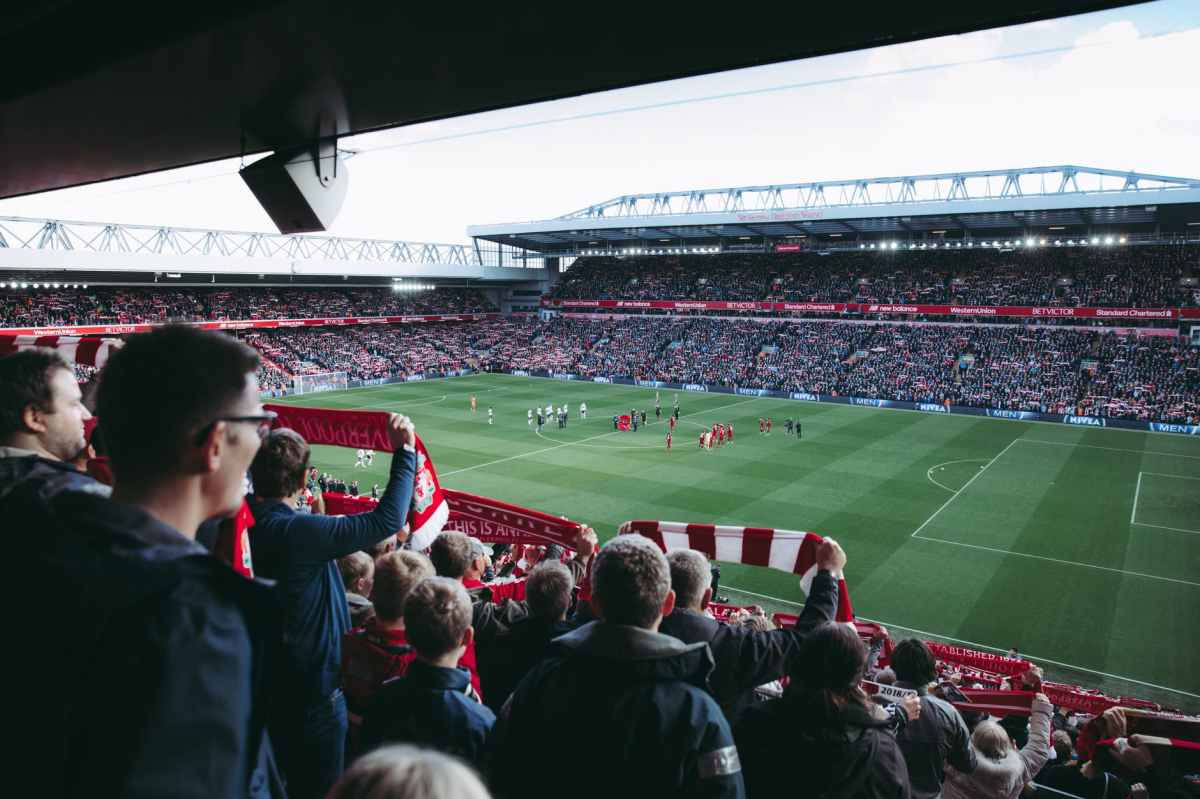
The ever-growing nature of football as a sport has been on a rapid rise, that it is now under the category of popular culture. Popular culture has been defined by Fiske as being created by the people (Understanding Popular Culture). Football as a sport is nothing without its fans, its active audience, which has had a presence in the overall growth of the sport since the inception of the Internet. Football has become more commercialised than ever before, thanks to the introduction of the world wide web and social media.
To put it perfectly, P. Fontes and R. Riberio in their book about Brazilian football, details that the sport has become globalised under the idea of ‘footballisation of the world’.
Let’s put this into perspective, FIFA, the leading organisation for football in the world, earns a revenue of $4.64 billion, with English club Manchester United having a brand value of $1.65 billion in 2019 (Statista). All seen through the overall involvement of the sport by fans all over the world. Europe as a whole love their football, 6 national teams in the top 10 world rankings are from the continent (FIFA). The European football market has a revenue of 28.9 billion Euros. More than half the world’s population watched the 2018 World Cup, showing its dominance as a popular culture and its dominance in the world of sports (FIFA).
The popularity of football can also be linked with the theory of an imagined community. Football fans feel like they are members of a group, they can connect with fans all over the world, with whom they have never met. The sharing of the support of a club has explained why the sport is on a continual rise. Fans become producers of the way the club operates, through the interaction of the teams merchandise and ‘imaginary community’. In accordance with the book by A.Kavoura, social media is a key way to see what works for a target audience. When a football club shares a post, the imagined community communicates with each other, showing the interconnectedness of social media, football and the concept of imagined communities. Media content becomes more universally parallel, as audiences become more passive. This imagined community is bigger than ever before, as a fan like me in Australia can communicate directly with the team I support all the way in England. Whether it is a comment, a like or a share, the communication with the team in this realm of an imagined community is still apparent. The concept of local to global is put into practise, through the ideas of the imagined community. Further connections with a club and its imagined community are seen through music, chants and branding, all essential for a growth of a popular culture.
The media has also had an integral impact of the concept of an imagined community. As they also consume the sport, they share the news up to date, providing an array of information. This allows for more interaction by fans to the news, and a further discussion seen through the use of social and news media.
Photo Source: Pixels.com.
Reference List
A, Kavoura, 2014, Social media, online imagined communities and communication research.
C, Gough, 2020, Barclays Premier League team brand values 2011-2019, Statista, accessed 9th of August 2020, available at, https://www.statista.com/statistics/236255/teams-of-the-english-premier-league-by-brand-value/.
C, Gough, 2020, Soccer Statistics and Facts, Statista, accessed 9th of August 2020, available at, https://www.statista.com/topics/1595/soccer/. ‘
FIFA, 2020, Men’s Ranking, accessed 9th of August 2020, available at, https://www.fifa.com/fifa-world-ranking/ranking-table/men/.
FIFA, 2018, More than half the world watched record-breaking 2018 World Cup, accessed 9th of August 2020, available at, https://www.fifa.com/worldcup/news/more-than-half-the-world-watched-record-breaking-2018-world-cup.
J, Fiske, 1989, Understanding Popular Culture, Routledge.
P, Fontes, R, Riberio, 2014, The Country of Football: Politics, Popular Culture & the Beautiful Game in Brazil, BBB De Hollanda.
T, Bohle, Pixaby Photos, people watching soccer game, accessed 9th of August 2020, Photo https://www.pexels.com/photo/people-watching-soccer-game-1884574/”
 Mavro Productions